
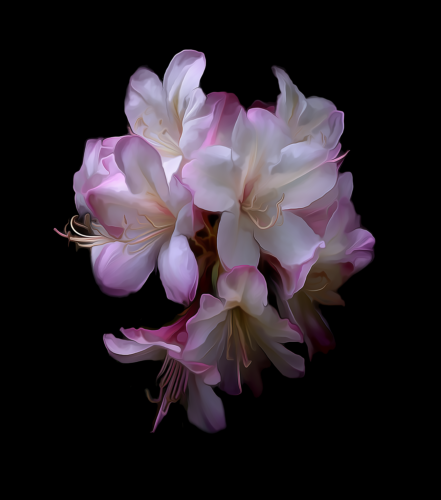
A blank office wall can flatten a room faster than poor lighting. The right artwork changes that immediately, and botanical wall art for office interiors does something especially rare – it introduces calm without draining the space of energy. When chosen with an artistic eye, botanicals do more than decorate. They soften hard lines, bring rhythm to structured environments, and create a visual atmosphere that feels composed, intelligent, and alive.
For professional interiors, that balance matters. An office should support concentration, but it should also reflect taste, intention, and a sense of identity. Botanical imagery has long carried that dual role. It feels grounded in nature, yet it can be interpreted in ways that are contemporary, dramatic, or quietly lyrical. In fine art form, a blossom, stem, or layered field of leaves becomes more than subject matter. It becomes mood, movement, and visual architecture.
Why botanical wall art for office settings works so well
Office interiors are often built from practical materials – glass, metal, stone, lacquered wood, neutral textiles. These surfaces create order, but they can also feel cool or impersonal when left unchecked. Botanical artwork introduces organic form into that structure. Curves interrupt grids. Petals soften edges. Color creates a point of emotional entry.
This is one reason botanical work remains so enduring in design. It is versatile without feeling generic. A spare study can hold a single floral print with commanding presence. A contemporary corporate suite may call for a bolder arrangement with layered color and stronger contrast. In both cases, nature is not being used as decoration alone. It is being translated into visual language that restores depth to the room.
Read more: Botanical Wall Art for Office SpacesThe difference between decorative botanicals and fine art botanicals
Not all botanical wall art creates the same effect. Much of what is marketed for offices is predictable – tidy leaves, generic green palettes, pleasant but forgettable compositions. That kind of work can fill space, but it rarely transforms it.
Fine art botanicals operate differently. They are shaped by point of view. The image may begin with a flower, branch, or bloom, but the final work is guided by composition, atmosphere, texture, and emotional weight. In artist-driven prints, the subject is often reimagined rather than merely recorded. Light becomes dramatic. Color is intensified or restrained with intention. Edges blur, dissolve, or sharpen in ways that create tension and movement.
That is where botanical art becomes especially compelling in office design. It offers the familiarity of nature, but through a sophisticated lens. Instead of mimicking a garden, it creates an impression – something more distilled, more expressive, and ultimately more memorable.
Choosing the right botanical wall art for office mood
The best piece is rarely the one that matches the sofa or echoes a paint sample most precisely. It is the one that establishes the emotional register of the room. In an office, that register depends on the kind of work happening there and the way the space is meant to be experienced.
A private office often benefits from work with presence and depth. Rich florals against dark grounds can feel intimate, focused, and quietly powerful. They create a sense of enclosure without heaviness, especially when the palette includes saturated reds, luminous whites, deep greens, or layered shadows.
A collaborative office or conference room usually needs more openness. Here, botanical compositions with expansive forms, airy movement, or brighter tonal shifts can keep the room visually active without making it chaotic. Work that suggests motion – petals in drift, stems in arc, layered fields of color – can energize a shared environment while still maintaining refinement.
Reception areas occupy a different category altogether. They are often the first visual statement a business makes, so the artwork should feel assured. A striking botanical piece can communicate polish and imagination at once. It tells visitors that the space has been considered, not simply furnished.
Scale changes everything
One of the most common mistakes in office art selection is choosing work that is too small. Botanical imagery often contains delicate detail, but delicacy does not require timid scale. In fact, larger work frequently allows the natural form to become more immersive and architectural.
A substantial print over a desk, credenza, or seating area can anchor the room with remarkable elegance. It gives the wall a center of gravity. Smaller works can also succeed, particularly when grouped thoughtfully as a pair or in a measured series, but they need enough visual mass to hold their own against office furniture and open wall space.
Multi-panel work deserves special attention here. Diptychs and triptychs can be particularly effective in offices because they create continuity and movement across a wall. With botanical subject matter, this format can feel cinematic – a bloom unfolding, a cluster of forms extending beyond a single frame, a gesture of nature translated into a contemporary installation.
Color, contrast, and restraint
Botanical art is often associated with green, but limiting the category to green tones misses its expressive range. Botanical forms can carry crimson, ivory, indigo, gold, violet, charcoal, or near-black with extraordinary impact. The palette should respond to the room, but not submit to it too obediently.
If an office is built around muted finishes, a more vivid botanical print can become the element that awakens the entire composition. If the interior already has strong materials or expressive furnishings, a quieter piece with tonal subtlety may bring the right kind of counterbalance. It depends on whether the room needs tension or calm.
Contrast is equally important. Dark-background florals, for example, introduce drama and depth that can make an office feel more curated and less corporate. High-key botanicals with luminous backgrounds can create lift and spaciousness. Neither approach is inherently better. The question is what emotional note the room should hold across the workday.
Placement should feel intentional, not obligatory
Art belongs where the eye naturally rests or travels. In an office, that may be behind a desk, opposite an entry, above a console, or along a corridor where movement slows just enough for a moment of attention. The goal is not to fill every wall. It is to create visual cadence.
Botanical pieces are especially effective in transitional areas because they soften movement from one zone to another. A hallway leading to offices, a waiting area outside a conference room, or a quiet niche near a reading chair can all benefit from imagery that feels organic and composed.
There is also value in giving a strong piece room to breathe. Fine art does not need to be crowded by shelving, signage, or too many adjacent objects. Negative space allows the work to resonate. In professional interiors, restraint often reads as confidence.
Botanical art and brand character
For designers and business owners, office artwork is never only personal. It also shapes how a company is perceived. Botanical imagery can support many kinds of brand identities, but the style of the work determines the message.
Minimal botanical studies may suggest precision, clarity, and understatement. More expressive floral compositions can communicate creativity, warmth, and originality. Textural or digitally reinterpreted botanicals often feel especially current because they bridge the natural world and contemporary visual culture. That combination can be ideal for firms that want their space to feel polished without becoming cold.
This is where artist-led work stands apart. A collection shaped by a distinct visual philosophy brings coherence to an interior. Arthur Jacob Impressions approaches botanical imagery not as passive representation, but as transformation – where photography becomes a more emotional, design-forward impression. In an office, that shift matters. It allows the artwork to feel curated, not generic.
What to avoid when selecting botanical wall art for office interiors
The safest choice is not always the strongest one. Artwork that is too polite can disappear into the room. On the other hand, work that is too loud or trend-driven may age quickly or distract from the space’s purpose.
The most successful botanical selections avoid both extremes. They have clarity of composition, enough visual character to hold attention, and enough nuance to live with over time. They do not rely on cliché. They invite repeated looking.
It is also worth avoiding art chosen solely because it looks conventionally “office appropriate.” That phrase often leads to blandness. Professional spaces deserve the same artistic seriousness as residential interiors, perhaps more so, since they host daily rituals of focus, conversation, ambition, and reflection.