
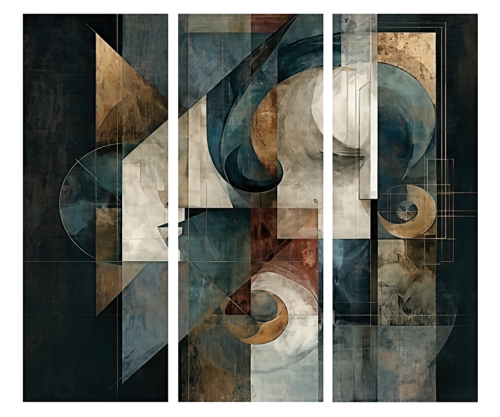
A large wall can either quiet a room or leave it feeling unfinished. The difference often comes down to proportion and presence. Triptych art for large walls answers that challenge with unusual elegance, giving expansive interiors a sense of rhythm, movement, and visual intention that a single small piece rarely achieves.
What makes a triptych so compelling is not simply its size. It is the way an image unfolds across three panels, creating a measured pause between forms and allowing the eye to travel rather than stop. In a living room with soaring ceilings, a long hallway, a hospitality setting, or a carefully composed office, that sense of visual progression can feel architectural. The artwork does not merely fill space. It shapes how the space is experienced.
Why triptych art works so well on large walls
A large wall asks for more than decoration. It asks for balance. Too little artwork can seem incidental, while one oversized rectangular piece may feel visually heavy depending on the room. A triptych introduces scale with greater nuance. Because the composition is divided into three related panels, the overall effect feels expansive without becoming monolithic.
This format also creates a natural cadence. Repetition, interruption, and continuation all happen at once. The spaces between panels become part of the composition, almost like breaths within a phrase. That is one reason triptychs often feel especially sophisticated in contemporary interiors. They hold visual weight, yet they leave room for air.
For designers and collectors, there is another advantage. Triptychs can bridge the practical and the expressive. They bring enough width to anchor a sectional sofa, bed, reception area, or dining wall, but they also offer emotional complexity. A floral subject may open like a slow gesture across three canvases. An abstract composition may build tension from panel to panel. A landscape-inspired piece may suggest memory rather than geography. In each case, the wall becomes more than a backdrop.
Choosing triptych art for large walls with intention
The strongest selection begins with mood, not measurements alone. Scale matters, of course, but emotional tone matters just as much. Before choosing a piece, consider what the room should feel like when someone enters it. Should the atmosphere be serene, dramatic, lyrical, contemplative, or electric with color and movement? The right triptych establishes that mood immediately.
In quieter interiors, art with atmospheric texture or softened forms can create depth without overwhelming the room. In more assertive spaces, a bold triptych with saturated color, graphic contrast, or expressive motion can become the room’s defining visual statement. Neither direction is inherently better. It depends on whether the art is meant to complement the architecture or command it.
Subject also changes the character of the space. Abstract triptychs tend to offer the most flexibility because they engage emotion and design simultaneously. Floral and botanical works can soften structured interiors while still feeling elevated rather than decorative when handled with a gallery sensibility. Pieces built from photographic origins but transformed through digital interpretation carry a particular resonance here. They preserve a trace of reality while moving beyond it, creating imagery that feels both familiar and imagined.
That layered quality is especially effective on large walls. The viewer does not take in the whole work at once. They approach, step back, and notice different relationships between texture, color, and form. The art unfolds over time.
Scale, spacing, and the visual architecture of the room
When selecting triptych art for large walls, proportion should feel intentional in relation to furniture and surrounding space. As a general principle, the combined width of the three panels should visually relate to the object beneath or near it. Above a sofa or bed, the artwork should feel broad enough to anchor the composition, not float uncertainly in the middle of a wide expanse.
Spacing between panels matters just as much as the dimensions of each piece. Too narrow, and the work can lose the elegance of separation that makes a triptych distinctive. Too wide, and the image may feel fragmented. Consistent spacing usually creates the most refined result, allowing the eye to move comfortably from one panel to the next.
Height placement requires a similar sensitivity. In residential interiors, art typically feels strongest when it connects to the lived eye level of the room rather than being pushed too high to fill vertical emptiness. On tall walls, that can feel counterintuitive. But mounting the work too high often weakens its emotional impact. The better approach is usually to keep the art visually tied to furnishings and let the surrounding wall space contribute to the sense of scale.
There are exceptions. A dramatic foyer, stair wall, or double-height commercial interior may call for a higher or more expansive placement. In those spaces, the triptych can operate almost like a sequence of windows, pulling the eye upward and across. The right decision depends on how the room is viewed and from what distance.
Color and movement across three panels
One of the most beautiful aspects of a triptych is the opportunity for momentum. Because the image extends across three surfaces, color can crescendo, dissolve, or shift in subtle ways. This makes triptychs particularly suited to expressive work where motion and atmosphere are central.
A composition built around luminous blues, deep florals, warm metallic notes, or black-ground drama can change the entire emotional register of a room. On a large wall, these color relationships have room to breathe. The eye experiences them sequentially, which creates a more immersive encounter than a compact print can offer.
Movement also becomes more palpable in a triptych format. A line can begin in one panel and resolve in another. A burst of texture can gather force toward the center. A central stillness can be framed by outer panels alive with energy. This interplay gives the artwork a cinematic quality without becoming literal. It suggests unfolding rather than explanation.
For collectors and design professionals, this is often the difference between art that simply coordinates with a room and art that gives the room its pulse.
Where triptych art feels most at home
Large living spaces are an obvious setting, but not the only one. A triptych can bring refinement to dining rooms, bedrooms, executive offices, boutique hospitality interiors, and transitional spaces that need visual continuity. Hallways and corridors, in particular, can benefit from the linear flow of three panels. The eye naturally follows the sequence, making the passage feel more composed.
In bedrooms, a triptych above the bed can feel softer and more balanced than one heavy statement piece, especially when the imagery carries a dreamlike or atmospheric quality. In professional interiors, the format offers polish and gravitas without feeling predictable. It suggests curation.
That said, not every large wall needs a triptych. Some spaces call for a single commanding work, while others benefit from a salon-style arrangement. The appeal of the triptych lies in its particular blend of order and expansiveness. When a room needs both structure and feeling, it is often the right answer.
The collectible appeal of the triptych
Beyond design logic, triptychs carry a certain artistic authority. The format has a long visual history, yet it remains unmistakably current in contemporary interiors. That tension between tradition and modern presentation gives it lasting relevance.
For collectors, a triptych often feels more immersive because it creates a relationship between parts and whole. Each panel can stand with integrity, yet the full composition delivers a more complete emotional effect. There is a sense of orchestration to it. The work breathes across the wall.
This is especially true when the artist approaches the image as an impression rather than a document. In work shaped by photographic vision and transformed through digital artistry, the triptych becomes a stage for reinterpretation. Color intensifies. Form loosens. Reality is not copied but reimagined. That sensibility gives multi-panel art a gallery presence that feels deeply at home in curated interiors.
Arthur Jacob Impressions speaks directly to this kind of visual experience, where a captured image becomes something more expressive, more tactile in feeling, and more resonant on the wall.
Living with triptych art for large walls
The finest large-scale art does more than occupy space on move-in day. It continues to reveal itself. Morning light may sharpen one panel and soften another. Evening shadows may deepen contrast and texture. From across the room, the work reads as a unified statement. Up close, it offers smaller discoveries.
That is the quiet strength of triptych art for large walls. It brings scale without bluntness, structure without rigidity, and emotion without excess. For rooms that deserve more than filler, it offers a composition that feels considered, immersive, and unmistakably alive.
Choose the piece that changes the atmosphere the moment you see it – then let the wall become part of the art’s unfolding presence.
Leave a Reply