
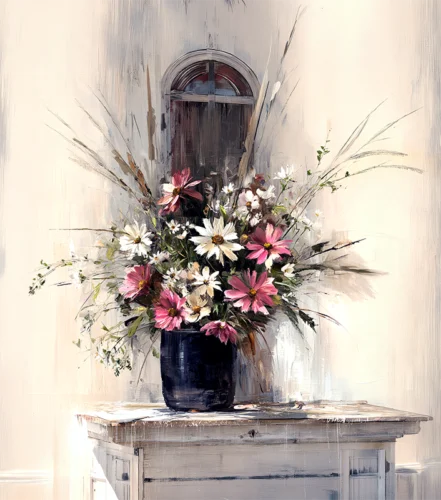
A photograph can preserve what was seen. Art can reveal what was felt. Digitally manipulated photographic prints live in the fertile space between those two impulses, where a captured instant is reimagined through color, texture, gesture, and light. The result is not simply an image of a flower, shoreline, city, or fleeting figure. It is an impression that carries the emotional charge of the original moment into a new visual language.
For collectors and designers, that distinction is deeply felt. A conventional photograph may describe a subject with clarity. A transformed photographic print can establish an atmosphere, alter the pace of a room, or create the kind of visual pause that makes a space feel considered rather than merely furnished.
When a Photograph Becomes an Impression
Digital manipulation is sometimes misunderstood as an effect applied after the fact. In fine art practice, it is more closely related to the decisions of a painter or printmaker: what to emphasize, what to dissolve, where to let color gather, and how much of reality to retain.
The camera supplies a foundation – a trace of lived experience, light, form, and place. The artist then works beyond documentation. A sharply observed blossom may become a luminous sweep of saturated color. Water may shift from a literal surface into a field of motion. Architectural details can loosen into rhythm and geometry. The source remains present, but it no longer dictates the final image.
This transformation is what gives the work its particular tension. The viewer senses something recognizable, yet cannot entirely possess it as a record of a single place or event. The image asks for a more intuitive response. It invites memory, association, and feeling.
Why Digitally Manipulated Photographic Prints Feel Different
The strongest digitally manipulated photographic prints are not defined by the software used to make them. They are defined by artistic judgment. Digital tools can extend the range of the photograph, but they cannot substitute for composition, restraint, or a practiced eye for visual harmony.
A successful piece often balances opposing qualities. It may be fluid yet structured, vivid yet controlled, or abstracted while still rooted in an observed world. That balance gives the work staying power. Rather than revealing itself all at once, it can continue to shift with the viewer’s attention and with the changing light of the room.
Color is especially powerful in this process. In a conventional photograph, color may be descriptive: the red of a petal, the blue of a sky. In an expressive print, color becomes emotional architecture. A deep black ground can heighten the radiance of blossoms. A dense field of blue may suggest stillness, distance, or recollection. Warm passages can carry energy forward, while quieter tones create room for the eye to rest.
Texture also changes the experience of the image. Layered marks, softened edges, fractured light, and delicate veils of transparency can introduce a tactile quality that feels less mechanical and more atmospheric. The print remains photographic in origin, but its presence moves toward painting.
A More Personal Kind of Wall Art
Mass-produced decor is often designed to disappear politely into a room. Fine art should do something more memorable. It should offer a point of view.
Artist-driven photographic prints bring that point of view into interiors without demanding that every room become a gallery in the formal sense. A single bold floral can give a neutral living space a pulse of color. An abstract memory of water or landscape can soften a professional office without becoming generic. A multi-panel composition can create visual movement along a long wall, guiding the eye through an entryway, dining room, or hospitality setting.
The appeal is not only decorative, though decoration matters. These works allow an interior to feel more individual because they resist the expected. They retain the immediacy of photography while offering the freedom of abstraction. For a collector, that can mean choosing a piece that feels connected to a mood rather than to a familiar subject. For a designer, it means having art that can hold its own within a layered scheme of materials, furnishings, and light.
Choosing a Print for Color, Scale, and Mood
The most satisfying choice begins with the room’s emotional intention, not with a search for an exact color match. A print does not need to repeat every hue already present in the space. Often, it is more compelling when it introduces a fresh note or draws out a subtle tone that might otherwise go unnoticed.
In a room shaped by pale woods, linen, and quiet neutrals, a richly colored work can become the decisive gesture. Against darker walls or more dramatic interiors, luminous blooms and high-contrast images can feel almost theatrical. Black-ground floral compositions, in particular, offer a striking way to bring brilliance forward while preserving a sense of sophistication.
Scale changes the emotional register as much as color does. A smaller print can function as an intimate visual discovery, especially in a reading corner, hallway, or layered salon-style arrangement. A larger work has a different role. It creates an anchor and gives the room a visual center of gravity.
There is no universal rule that large art belongs only in large rooms. A generously scaled piece in a smaller space can create confidence and depth. Conversely, several smaller works may be the better choice when the architecture calls for rhythm rather than a single focal point. Diptychs and triptychs are particularly effective when a wall needs movement and continuity without the weight of one uninterrupted image.
The Value of Ambiguity
Not every artwork needs to explain itself immediately. In fact, some of the most resonant pieces leave space for interpretation.
A digitally transformed photograph may evoke a garden without presenting a botanical study, or suggest a remembered journey without naming a destination. This ambiguity is not evasive. It gives the viewer room to enter the image with personal experience. One person may see celebration in a burst of color; another may find tenderness, solitude, or renewal.
That openness can make a print especially rewarding in a home or workplace. The image does not become exhausted by a single reading. It changes in conversation, in different seasons, and in the shifting conditions of daily life. Art with this kind of elasticity becomes part of the atmosphere of a space rather than a static accessory within it.
Craft Still Matters
Expressive imagery deserves equally considered presentation. Fine art printing is not a final administrative step after the creative work is complete. It is part of how the image speaks.
Subtle tonal transitions, saturated passages of color, and delicate textural detail all depend on a print process that can carry their nuance. The material, scale, framing approach, and surrounding light influence whether an image feels intimate, expansive, quiet, or commanding. A work intended for a refined residential interior may call for a different presence than one selected for a lobby, executive setting, or guest suite.
This is also where the distinction between an original artistic vision and a decorative reproduction becomes clear. An artist such as Arthur Jacob approaches the photographic image as a starting point for visual invention, creating prints meant to be lived with and returned to. The work is not asking the viewer to admire technique alone. It is asking them to feel the image.
Let the Art Set the Tone
The best placement is rarely the one that merely fills an empty wall. Before choosing a work, stand in the room and notice its existing energy. Is it calm, spare, intimate, formal, or restless? Then consider what the art should add: a moment of radiance, a sense of motion, a dark and dramatic counterpoint, or a quiet field of contemplation.
Give the image enough visual breathing room to register. Let it converse with the interior, but do not make it compete with every object around it. When a photograph has been transformed with imagination and intention, it can do more than complete a room. It can change the way the room is remembered.
Leave a Reply