
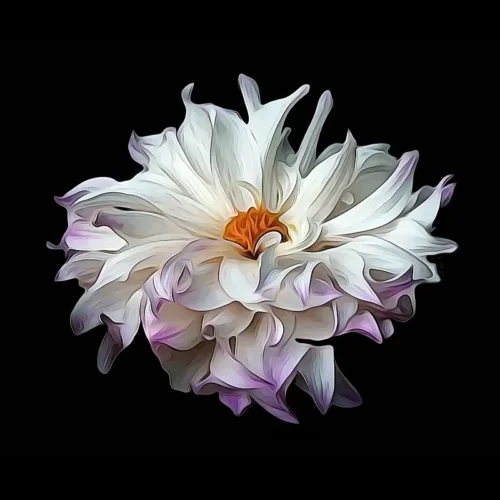
A photograph can preserve what the eye saw. A fine art print can carry what the moment felt like. That distinction is where photographic prints for collectors begin: not as decoration selected to fill a wall, but as a visual encounter that continues to reveal itself through color, gesture, texture, and atmosphere.
For the discerning collector, photography offers an unusually intimate route into contemporary art. It begins with the tangible world, yet it can move far beyond documentation. A blurred bloom, a field of saturated color, a fragment of architecture, or a remembered landscape can be transformed into an image with the emotional force of a painting. The best works do not merely record reality. They reinterpret it.
What Makes a Photographic Print Collectible?
Collectibility is not defined by subject matter alone. A beautiful flower or dramatic horizon may initially attract attention, but an enduring print asks for a second look. Its composition has intelligence. Its color has intention. Its details support the whole rather than compete for attention.
The artist’s point of view is central. Collectors are drawn to work that feels authored – work in which they can sense a singular sensibility at play. In expressive photographic art, the camera is only one part of the process. Cropping, layered imagery, tonal shifts, abstraction, and digital manipulation can become instruments of interpretation. The finished image may retain the energy of its source while becoming something entirely new.
This is why a print need not look conventionally photographic to belong in a photography collection. Some of the most compelling contemporary pieces sit in the fertile space between photography, painting, and digital art. Their value lies in the artist’s ability to make perception feel newly alive.
Originality Is More Than an Unusual Subject
A collector does not need an image of something never photographed before. Flowers, water, city streets, and the human figure have all been explored endlessly. What matters is whether the artist has found a distinctive visual language.
Look for decisions that could not have been made by just anyone: an unexpected crop that turns a blossom into a burst of movement; a black ground that gives luminous petals a theatrical presence; a softened field of color that evokes memory rather than place. Originality often appears in these choices. It is felt before it is explained.
Choosing Photographic Prints for Collectors
The most satisfying acquisition is rarely the one that matches a room most literally. It is the one that changes the room’s emotional temperature. A vivid abstract can lend a quiet interior a pulse. A floral composition can introduce softness without becoming sentimental. A moody, high-contrast image can give a contemporary office depth and composure.
Begin with your response to the work itself. Does the image hold your attention after the first moment? Does it create a mood you want to live with? Does it offer enough visual complexity to remain engaging, yet enough clarity to feel resolved? These are more useful questions than whether the colors perfectly repeat those of a rug or accent chair.
That said, placement matters. Art exists in relationship to architecture, furnishings, light, and the people moving through a space. A collector choosing for a private residence may favor an image that invites reflection at close range. A designer selecting work for a hospitality setting may seek scale, rhythm, and immediate impact. Neither approach is more valid. The setting simply changes what the artwork must do.
Consider Scale as a Visual Statement
Scale is not a practical afterthought. It shapes the experience of the image. A small print can feel precious, concentrated, and personal, especially in an intimate corridor, reading room, or grouped installation. A larger work has the authority to anchor a living room, reception area, or expansive wall where the art must hold its own against architecture.
Before choosing a size, consider viewing distance. Work seen from across a room needs a strong silhouette, confident color relationships, or a composition that reads clearly at scale. Work intended for close viewing can reward nuance: fine textures, subtle tonal transitions, and layered details that emerge gradually.
Multi-panel works deserve particular attention. A diptych or triptych introduces cadence, allowing an image to unfold across the wall rather than remain contained within a single frame. The divisions create pauses, movement, and a more architectural relationship with the room. In a long hallway or above a substantial console, this structure can be especially compelling.
Let Color Carry Feeling
Color is often the first language a room speaks. In photographic art, it can be descriptive, but it can also be deeply expressive. A saturated red may feel urgent and floral at once. Deep blues can suggest distance, stillness, or immersion. A restrained palette may allow texture and form to take the lead.
Instead of asking whether a piece matches, consider whether it converses with its surroundings. A work can echo a room’s existing tones for a quiet, integrated effect. Or it can introduce contrast that gives the entire interior new energy. A neutral space often benefits from one concentrated moment of visual intensity.
For collectors building a cohesive group over time, repeating a color family can create continuity across different subjects. Yet too much coordination can make a collection predictable. Leave room for surprise. A single work with a sharper palette or darker mood can give the surrounding pieces greater life.
The Role of Materials and Presentation
An art print is also an object. The visual experience depends on how faithfully the image is rendered and how thoughtfully it is presented. Rich blacks, nuanced highlights, accurate color, and clarity of detail all shape the character of a photographic work. When an artist’s process relies on luminosity, texture, or layered color, those qualities should remain present in the finished print.
Framing extends the composition into the room. A minimal frame can preserve a crisp contemporary edge, while a more substantial treatment can lend gravitas and visual pause. The right choice depends on the work and the environment. Highly expressive imagery often benefits from restraint around it, allowing the image itself to carry the drama.
Lighting should be considered with equal care. Natural light changes throughout the day and can bring remarkable variation to a print, but prolonged direct sun may be harsh on any work displayed over time. Thoughtful ambient or dedicated art lighting allows color and tonal depth to remain visible after evening falls.
Building a Collection With a Point of View
A collection becomes memorable when it reflects a sensibility, not simply a series of separate purchases. This does not mean every piece must share the same subject or palette. It means that, together, the works create a recognizable atmosphere.
Perhaps you are drawn to images that hover between abstraction and nature. Perhaps your eye returns to motion, brilliant color, and forms that appear to dissolve into light. Or perhaps black backgrounds, luminous blossoms, and dramatic contrasts offer the visual tension you seek. Follow those instincts. They are often the beginning of a collection with real identity.
There is also value in allowing a collection to develop slowly. One exceptional work can establish a visual center. The next piece may answer it with a different scale, subject, or mood. Over time, relationships emerge: echoes of color, repeated gestures, contrasts between calm and intensity. This approach gives art room to become part of your life rather than a finished design scheme all at once.
At Arthur Jacob Impressions, the photographic image is treated as a starting point for vision rather than an endpoint. Through expressive color, digital transformation, and a sensitivity to movement and form, the work invites viewers to encounter familiar subjects in an altered emotional light.
Living With Art That Continues to Change
The strongest prints do not stay fixed in our perception. Morning light may pull forward a delicate texture that disappears at dusk. A composition that first seemed exuberant may later reveal a quieter structure beneath its color. A work placed near a favorite chair can become part of a daily ritual, noticed differently in passing than it is during a long, unhurried look.
This is the lasting pleasure of collecting photographic art. The image remains still, but your relationship to it does not. Choose the work that gives you that feeling of return – the sense that there is more there, waiting for the next glance.
Explore the different original fine art print collections of Arthur Jacob
Leave a Reply