
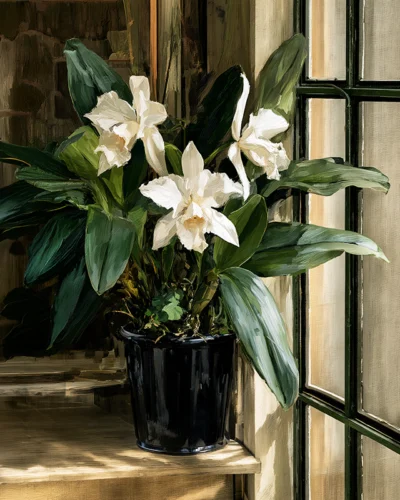
A memorable work of art does not enter a room quietly. It changes the rhythm of a wall, catches the eye at different hours, and gradually becomes part of the life unfolding around it. That is what makes art gifts for collectors so compelling: the right piece is not simply given, but lived with, revisited, and newly felt over time.
For the seasoned collector, the pleasure may be in recognizing a distinct visual voice. For the design-conscious recipient, it may be the sudden energy of color, motion, or form. In either case, a meaningful art gift begins with attention. It asks not only what looks beautiful, but what kind of image will continue to reveal itself long after the occasion has passed.
The Best Art Gifts for Collectors Have a Point of View
Collectors do not need another object to fill a blank space. They respond to work that feels authored – art that carries evidence of a particular eye, an imagination, and a decision about how reality should be seen.
This distinction matters especially with photographic and digitally transformed art. A literal photograph can preserve a scene, but an artist-driven interpretation can move beyond recordkeeping. Through saturated color, layered texture, softened detail, or a sense of kinetic gesture, an image becomes an impression. It holds onto the world while becoming something more interior: a mood, a memory, a visual reverberation.
When choosing a gift, look for that sense of transformation. Does the piece feel as though it could have been made by anyone, or does it possess a recognizable visual conviction? The latter is more likely to remain meaningful in a collection. It offers the recipient not just a beautiful image, but a perspective worth returning to.
A strong point of view does not have to be difficult or obscure. A floral composition can be immediately inviting while still carrying surprising depth. An abstract can be bold and accessible while allowing the viewer to find new relationships among color and movement. The work should make an immediate impression, then reward a slower gaze.
Begin With the Collector’s Visual World
The most successful gift reflects the recipient without merely matching their existing décor. Consider the places where they spend time and the atmosphere they have already begun to create. Some collectors favor rooms of quiet neutrals and sculptural restraint. Others surround themselves with vivid textiles, layered objects, and expressive gestures. Neither approach dictates a single style of art, but each offers a useful clue.
A home with calm architecture may welcome a dramatic burst of chromatic energy. A richly appointed interior may benefit from a work with spare composition and a strong focal point. Contrast can be as thoughtful as harmony. The goal is not to make the artwork disappear into the room. It is to give the room another voice.
Pay attention, too, to what the recipient responds to when no one is asking them to explain it. Perhaps they pause before flowers in deep shadow, speak about the changing light on water, or favor images that feel cinematic and slightly dreamlike. These instincts are often more revealing than a declared preference for a genre. They point toward the emotional register that a work of art should carry.
For someone building a first collection, a piece with immediate visual clarity can be an especially generous choice. For a long-time collector, a more unexpected work may be welcome – provided it still feels connected to their sensibility. The trade-off is simple: familiar imagery can feel reassuring, while a bolder selection can open a new chapter in the collection. Neither is automatically better. The recipient’s appetite for surprise is the deciding factor.
Choose Work That Can Live Beyond the Occasion
A gift is often selected in the warmth of a particular moment: a milestone, an anniversary, a new home, or a professional achievement. Fine art should honor that moment without becoming trapped by it.
Avoid choosing only for an obvious symbol. A work connected too narrowly to a date or place may carry sentiment, but it can lose its force once the event recedes. Instead, seek imagery with emotional range. Blossoms can suggest renewal without becoming a literal celebration. A luminous abstract can evoke movement, confidence, or possibility. A landscape-inspired image can hold the feeling of a remembered place without naming it.
This is where expressive fine art prints have a particular strength. They can be deeply personal without being overly prescriptive. The recipient may see joy in a field of bright color one year and resilience in it the next. The image has room to change as life changes around it.
Scale is part of that lasting presence. Smaller work can create an intimate moment in a reading nook, hallway, or layered salon wall. Larger art becomes an anchor, establishing a visual center in a living room, entry, office, or hospitality setting. Multi-panel work offers another possibility. A diptych or triptych can introduce a measured rhythm across a broad wall, allowing one image to unfold in space rather than remain contained within a single frame.
Before making a selection, imagine the work at a distance as well as up close. Does it hold the wall? Does it retain its visual intelligence when seen from a few feet away? Great art gifts for collectors often satisfy both questions. They make an impression across the room and invite closer attention through texture, detail, and nuance.
Give the Gift of a Visual Experience
Art becomes more resonant when the presentation acknowledges its significance. This need not be elaborate. What matters is that the recipient feels invited into the work rather than handed a decorative afterthought.
A brief handwritten note can make a difference. Rather than explaining what the image is supposed to mean, share what drew you to it: the movement within the composition, the way the colors seemed to glow, the sense of calm or exhilaration it created. Leave space for the recipient to form their own relationship with the piece. Art is most alive when it is not overinterpreted.
If the work is intended for a particular room, you can mention the possibility gently, but resist prescribing its final location. Collectors and design lovers often enjoy the ritual of moving art from one wall to another, discovering where it comes fully into focus. The piece that first appears destined for an entry may eventually become the quiet center of a bedroom or office.
Framing also changes the character of the gift. A restrained frame can let a high-color composition breathe, while a darker or more architectural treatment can deepen an image with shadow and texture. There is no universal answer. The work, the setting, and the recipient’s preferences should lead. What matters most is that presentation supports the art rather than competing with it.
Originality Matters More Than Trend
Trends can be useful signals, but they are poor substitutes for visual connection. A color or motif may be everywhere for a season, then feel quickly dated. Art with a true internal life has a different staying power. It may be contemporary in its energy, yet not dependent on a passing design cycle.
This is why artist-created work makes such a distinctive gift. In collections such as Arthur Jacob Impressions, photography is not treated as a fixed document. A click becomes the beginning of a vision, reimagined through color, abstraction, gesture, and expressive form. The result is art that can speak to a collector’s eye while carrying enough decorative power to transform an interior.
The most rewarding choice is often the one that creates a small, immediate pause. It may be an abstract that feels like music held in color, a blossom emerging from black with theatrical intensity, or a memory-like image that seems both familiar and impossible to place. That pause is not a minor reaction. It is the beginning of a relationship with the work.
A fine art gift does not need to announce its importance. Let it arrive with presence, give it room to be seen, and trust the right image to keep speaking in its own changing light.
Leave a Reply