
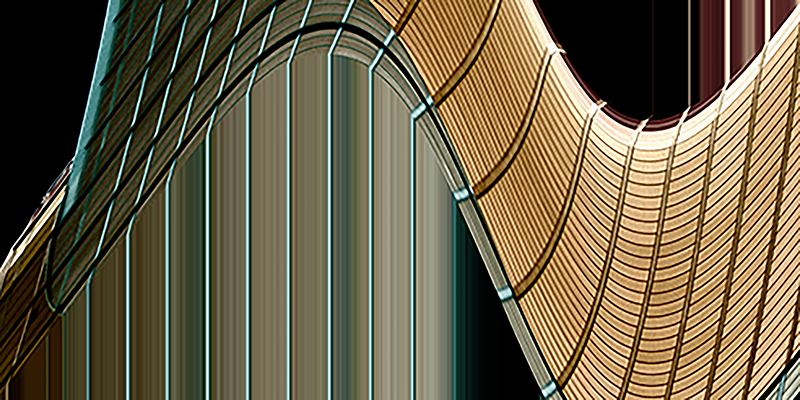
A hotel lobby is read in seconds. Before a guest notices the finish on the desk or the upholstery on the seating, the walls have already spoken. That is why art prints for hospitality interiors deserve more than an afterthought. They set emotional tone, guide perception, and give a space its memorability – the quality that turns a well-designed room into an experience.
In hospitality, artwork does more than fill square footage. It creates atmosphere at scale. A quiet corridor can feel cinematic. A restaurant can gain warmth, edge, or restraint. A guest suite can shift from polished to deeply personal with a single visual decision. The strongest interiors understand this instinctively. They treat art not as background decor, but as part of the narrative architecture.
Why art prints for hospitality interiors matter
Hospitality design lives under unusual pressure. It must impress immediately, hold up under repeated viewing, and appeal to a wide range of guests without feeling bland. Art helps solve that tension because it introduces identity without requiring structural change.
A carefully chosen print can soften hard modern lines, deepen a neutral palette, or provide a moment of visual rest in a richly layered room. It can also bring continuity across different zones of a property. The bar, the suites, the reception area, and the meeting spaces may all serve different functions, yet artwork can give them a shared emotional language.
This is especially true when the prints feel authored rather than generic. Guests can tell the difference, even if they do not name it that way. Art with a distinct point of view carries a charge. It suggests that the property has taste, intention, and confidence. In a competitive hospitality setting, those signals matter.
What makes hospitality art feel elevated instead of expected
The most compelling art prints for hospitality interiors usually resist the obvious. Literal destination imagery, predictable skylines, and decorative filler may feel safe, but they rarely leave an impression. Stronger work offers interpretation rather than explanation.
That is where contemporary photographic and digitally reimagined fine art can be especially powerful. When photography is transformed through color, motion, texture, and abstraction, it moves beyond documentation. It begins to operate like memory – suggestive, atmospheric, and emotionally open. That quality suits hospitality beautifully because guests are not looking for a lecture. They are looking for a feeling.
Abstract works can energize a lobby or lounge without over-directing the viewer. Florals and botanical impressions can bring sensuality and softness to guestrooms and spa settings. Multi-panel compositions such as diptychs and triptychs can create rhythm along long walls, extending the architecture rather than merely decorating it. The art becomes spatial.
Still, elevated does not always mean dramatic. Some interiors benefit from restraint. A boutique hotel with richly patterned textiles and sculptural lighting may need artwork with quiet depth rather than maximum contrast. In a minimalist property, the opposite may be true. Bold saturation and expressive form can keep the space from feeling emotionally distant. It depends on what the room already says.
Start with mood, not subject matter
Designers often ask what should be pictured in a hospitality setting. A better question is what should be felt.
If the goal is serenity, look for compositions with spaciousness, tonal control, and fluid movement. If the room needs vitality, seek works with stronger contrast, directional energy, or vivid color relationships. If the aim is intimacy, texture becomes crucial. Layers, softened edges, and shadow-rich imagery can make a large commercial space feel more human.
This is where art selection becomes more sophisticated than matching blues to blues or florals to florals. The real work lies in reading emotional temperature. A print may technically suit the palette and still flatten the room. Another may introduce an unexpected note – amber against slate, black-ground blossoms against warm neutrals, a blurred horizon in a sharply tailored suite – and suddenly the interior feels awake.
Hospitality spaces are remembered through mood. Art should support that memory.
Placement changes the meaning of the work
A single print can feel entirely different depending on where it is installed. In hospitality, placement is not secondary. It is part of the art direction.
Lobby artwork often carries the greatest symbolic weight. It announces identity and sets expectations. Larger-scale works or grouped installations tend to succeed here because they can hold their own against volume, traffic, and architectural features. In this context, visual confidence matters.
Guestrooms call for a different sensibility. Here, art is experienced at closer range and for longer periods. The best pieces reward repeat viewing. They do not exhaust themselves in one glance. Nuance, layered color, and evocative composition become especially valuable because they continue to unfold over time.
Corridors, meanwhile, are often treated as functional spaces when they could be cinematic transitions. Repetition, series-based hanging, or multi-panel works can create movement and cadence. A long hallway becomes less of a passage and more of a visual sequence.
Restaurants and lounges need special care. Artwork in these spaces competes with conversation, lighting shifts, and a strong sensory environment. Pieces with clear formal presence tend to work better than art that relies on delicate detail alone. Texture, shape, and tonal drama help the work remain legible in low light and across distance.
How to choose art prints for hospitality interiors with staying power
Trend-driven art can date a property quickly. Timeless art does not mean conservative art, but it does mean choosing work with depth beyond novelty.
One useful test is to ask whether the piece still holds your attention after the first visual hit. Strong work has an afterimage. It lingers because the composition is resolved, the emotional tone is clear, and the artist’s perspective feels genuine. That sense of authorship matters. It gives the print integrity, which is why artist-driven collections often feel more lasting than mass-produced decor.
Another test is versatility. Hospitality interiors evolve. Furniture changes, fabrics are refreshed, public spaces are reimagined. Artwork with layered color and expressive form can adapt surprisingly well through those shifts because it is not tied to a narrow trend cycle. It has visual range.
This is one reason gallery-minded collections are so effective for designers and hospitality teams. A body of work built around recurring themes – abstract motion, blossoms on black, memory-like landscapes, or refined multi-panel arrangements – offers consistency without repetition. There is cohesion, but also room to shape different zones with distinct emotional accents.
For properties seeking that balance of sophistication and visual resonance, Arthur Jacob Impressions reflects a particularly compelling approach. The work begins in photography but does not end there. It is transformed into something more interpretive and atmospheric, where color, gesture, and form carry as much meaning as the original image.
Common mistakes that weaken the room
The most frequent mistake is choosing art too late. When artwork is treated as the final accessory, it is often forced to solve problems it should have helped prevent. Better results come when art is considered early, alongside materials, lighting, and furniture.
Another mistake is over-explaining the concept through the artwork. If the hotel is coastal, the art does not need to announce the ocean in every room. Suggestion is usually more elegant than repetition. Guests respond well to atmosphere and interpretation because those qualities feel curated rather than branded.
Scale is another point of tension. Art that is too small can make even a luxurious interior feel hesitant. Art that is too dominant can crowd a room that needs breathing space. The right answer depends on ceiling height, viewing distance, wall proportion, and what else is happening in the room. There is no single rule, only visual judgment.
The guest may not remember the title, but they remember the feeling
That is the real measure of successful hospitality art. Not whether every guest can identify the medium, but whether the space stays with them. A luminous abstract in the lobby, a blossom study against a dark ground in the suite, a triptych that slows the rhythm of a corridor – these become part of the memory of the stay.
Art prints for hospitality interiors work best when they are chosen with both discipline and imagination. They should serve the room, but they should also lift it beyond function. In a field built on experience, that difference is everything.
Choose work that does more than coordinate. Choose work that leaves a trace.