
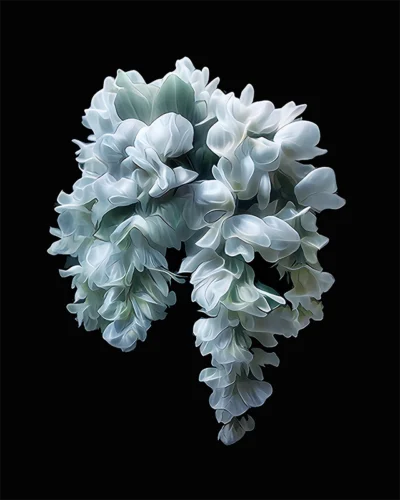
A flower photographed exactly as it appears can be lovely. A flower transformed through color, movement, shadow, and imagination can remain with you long after you leave the room. That is the distinction that gives collectible floral art prints their particular power: they do not simply decorate a wall. They create an atmosphere, hold a memory, and invite a second look.
For collectors and design-conscious homeowners, floral work offers a familiar subject with extraordinary range. A blossom can feel intimate or monumental, serene or electric, classical or strikingly contemporary. When the image is shaped by an artist’s hand rather than treated as a generic motif, it becomes something more lasting than seasonal decor. It becomes an impression.
What Makes Floral Art Prints Collectible?
Collectibility begins with authorship. A work carries greater presence when it reflects a distinct visual language: a recognizable use of light, a particular relationship to color, an unusual sense of abstraction, or an approach to composition that could not be mistaken for anyone else’s. The flower may be the subject, but the artist’s interpretation is the reason it matters.
This is especially true in photographic and digitally reimagined work. The lens records a starting point, not necessarily the final statement. Through selective focus, layered texture, heightened color, or expressive motion, an ordinary bloom can move beyond description. It can become luminous, atmospheric, even dreamlike. The result is not a record of a garden. It is a visual experience with its own emotional weather.
A collectible print also rewards continued looking. Its impact is immediate, yet it does not reveal everything at once. From across a room, the composition may read as an energized field of color. Up close, a viewer notices a softened edge, a deep black ground, a gesture of petals dissolving into light. That balance between decorative force and visual complexity allows the artwork to live well in a space over time.
Collectible Floral Art Prints as Interior Statements
Floral art is often underestimated because it is so recognizable. Yet a strong floral image can do what few other subjects can: bring organic vitality into an ordered interior without sacrificing sophistication. It introduces softness to architectural lines, movement to a restrained palette, and a human sense of wonder to rooms designed around polished surfaces.
Scale changes the conversation. A large floral print over a sofa, reception desk, or bed can establish the emotional center of the room. It becomes a destination for the eye, particularly when the work carries saturated color or a dramatic contrast between bloom and background. In a smaller setting, a more intimate piece can create the opposite effect – a quiet visual pause in a hallway, reading corner, or private office.
The right choice depends less on whether a room is modern, traditional, or transitional than on the feeling it needs. A pale, airy floral composition can bring calm to a sunlit bedroom. A high-chroma blossom can animate a neutral dining space. Florals on black offer a more cinematic presence, allowing petals and color to emerge from darkness with a sense of depth and drama. None of these approaches is inherently more refined than another. The essential question is whether the work gives the room a stronger point of view.
For professional interiors, floral art can be equally persuasive. In hospitality, wellness, and client-facing spaces, it offers warmth without becoming overly literal. In offices, it can offset the impersonal quality of glass, stone, and uniform furnishings. The most successful selections feel considered rather than merely pleasant: they contribute a visual identity that visitors remember.
Look Beyond the Literal Flower
When choosing floral art, it is tempting to begin with botanical preference. You may be drawn to tulips, lilies, peonies, or wildflowers because they carry personal associations. That instinct is valid, but it should be only one part of the decision. The strongest piece may be the flower that speaks less to your garden and more to your imagination.
Consider the work’s energy. Does it feel still, windswept, intimate, celebratory, mysterious? Notice whether the image relies on crisp detail or whether it allows form to blur, fragment, or float. A print with softened contours can feel painterly and reflective, while sharper graphic treatment may create a more contemporary, architectural effect.
Color deserves equal attention. Floral imagery offers a rare license for intensity, but bold color should not be selected only to match a pillow or rug. A vivid red, cobalt, gold, or violet can become the element that gives an otherwise restrained room its pulse. Conversely, a limited palette may create coherence in a space already rich with materials and pattern. The goal is not coordination at every turn. It is a relationship that feels deliberate.
The value of contrast
Some of the most compelling floral images are built on contrast: fragility against darkness, softness against graphic structure, natural form against digital transformation. Blossoms presented on a black field, for example, can feel almost sculptural. The absence of visual noise directs attention to each curve, edge, and flare of color.
This is why a floral print can work beautifully in spaces where flowers might not seem obvious. A dark, tailored library. A minimalist entryway. A contemporary conference room. The subject is natural, but the presentation can be unapologetically modern.
Build a Collection With Rhythm, Not Repetition
A single floral print can command a wall. A group of works can create a more immersive experience, provided each piece has room to breathe. The aim is not to repeat the same bloom in several frames. It is to establish rhythm through related color, tonal contrast, or a shared sense of movement.
Diptychs and triptychs are particularly effective when a composition needs to travel across a long wall or respond to the proportions of a bed, dining table, or lobby seating area. Their multiple panels introduce a measured pause between images, letting the eye move through the work rather than receiving it all at once. A split composition can also heighten the feeling of motion, as though petals, light, and color are continuing beyond the frame.
In a mixed collection, pair florals with abstract work only when there is a genuine visual conversation between them. Perhaps both pieces share a saturated blue, a dark ground, or an expressive treatment of form. The flower does not need to be explained by the abstract, but the two should feel as though they belong to the same interior voice.
Avoid overfilling every available surface. Art gains authority from placement. A wall with one thoughtfully chosen print can feel more personal and complete than a crowded arrangement of unrelated images. Give the work enough surrounding space for its color and gesture to register.
The Artist’s Interpretation Is the Lasting Element
A floral image becomes memorable when it offers more than beauty. It should reveal a way of seeing. Arthur Jacob Impressions approaches the natural world as material for transformation, where a click of the camera becomes a vision shaped by color, texture, and expressive form. The resulting florals honor the original bloom while releasing it from the limits of straightforward representation.
That distinction matters for anyone seeking art with longevity. Trends can make a color or motif feel suddenly everywhere. A singular artistic perspective does the opposite: it gives the familiar a new identity. The work remains fresh because it continues to shift with the viewer, the light, and the room around it.
Let the Work Choose the Room
The most satisfying art selections are not always the safest ones. A floral print may ask for a wall you had not considered, a larger scale than you expected, or a richer color note than the room currently contains. Give that possibility some room. Art is not only there to confirm an interior plan; at its best, it changes the plan by giving the space a deeper emotional center.
Choose the floral work that keeps drawing you back, even when you cannot immediately explain why. That recurring pull is often where a collectible piece begins its life in your home.