
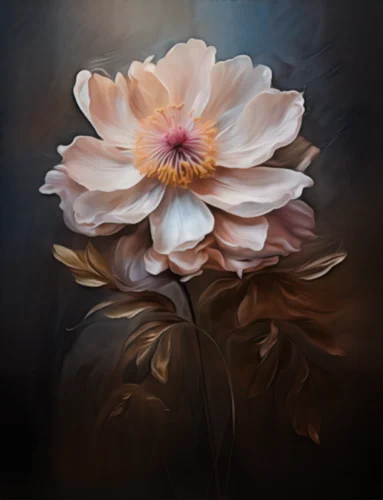
A flower does not need to be delicate to be beautiful. In the right artist’s hands, contemporary floral photography prints become charged with color, gesture, shadow, and atmosphere. They can hold the quiet gravity of a still life, the pulse of abstraction, or the theatrical intensity of a bloom illuminated against a deep black field. For interiors that need more than a decorative finishing touch, floral imagery offers a living visual presence.
The distinction lies in interpretation. A conventional botanical photograph records what is in front of the lens. Fine art floral photography begins there, then moves beyond description. Focus may soften, color may intensify, petals may dissolve into painterly movement, and familiar blossoms may become nearly unrecognizable. What remains is not simply a flower, but an impression.
Why Floral Art Still Feels Contemporary
Floral subject matter has always belonged to art, from early botanical studies to grand still lifes and modern abstraction. Its enduring appeal comes from its range. Flowers can suggest abundance, fragility, romance, renewal, or sensuality, yet they can also feel graphic, architectural, and unexpectedly bold.
Contemporary work resists the idea that floral art belongs only in traditional rooms. A close-cropped blossom in saturated red can command a minimalist dining room. A field of blurred color can soften the clean lines of a modern office. A luminous flower on black can bring drama to an entryway without requiring ornate surroundings.
This is why the strongest floral work does not rely on prettiness alone. It creates tension between the natural subject and the artist’s point of view. The image may be graceful, but it should also have conviction. It should reward a second look.
Contemporary Floral Photography Prints as Visual Atmosphere
A print’s effect on a room is often immediate, but not always obvious. Color establishes the first emotional note. Deep cobalt, crimson, violet, and gold can animate a neutral setting, while pale blush, cream, and silvery green create a more contemplative register. Yet color is only part of the experience.
Movement changes the temperature of an image. When a flower is rendered with intentional blur or layered digital treatment, the result can feel as though it is opening, turning, or caught in a current of air. This sense of motion is especially compelling in spaces built from still materials: stone, glass, polished wood, plaster, and metal. The artwork introduces energy without adding clutter.
Texture adds another dimension. A petal may appear velvety, translucent, weathered, or almost brush-painted. In a well-considered interior, this visual texture can echo woven fabrics, natural fibers, or the patina of handmade objects. The print becomes part of the room’s material conversation rather than an isolated image on the wall.
At Arthur Jacob Impressions, this transformation is central to the work. Lens-based imagery becomes a foundation for imagination, with digital manipulation used not to obscure the photograph, but to extend its emotional and expressive possibilities.
Choosing the Right Floral Image for a Space
The most useful question is not, “Which flower matches the room?” It is, “What should the room feel like when someone enters?” A floral print should be chosen for its emotional architecture as much as its subject.
For rooms that need a focal point
Look for high contrast, concentrated color, or a single oversized blossom. Images with dark backgrounds and radiant petals create immediate depth, particularly above a mantel, console, bed, or dining sideboard. They offer a strong center of gravity in rooms with restrained furnishings.
A dramatic floral piece works best when it is allowed to breathe. Avoid surrounding it with too many competing objects or smaller decorative works. One commanding image can do more than an entire wall of visual noise.
For rooms that need softness
A more atmospheric print can change the mood of a bedroom, reading area, or private office. Seek softened edges, layered hues, and compositions where the flower seems to emerge from light. These works do not demand attention through contrast alone. Instead, they invite the eye to linger.
This approach is especially effective when the interior already includes muted materials, warm woods, linen, clay, or quiet tonal variation. The artwork can deepen the sense of calm while keeping the room from feeling overly reserved.
For contemporary professional spaces
In offices, reception areas, hospitality environments, and conference rooms, floral photography can offer a welcome alternative to generic landscape imagery or purely geometric abstraction. It introduces humanity and visual warmth while retaining a polished, gallery-minded character.
For these settings, scale and cohesion matter. A single large statement work can define a reception area, while coordinated diptychs or triptychs can give a long corridor or meeting room a deliberate rhythm. Multi-panel work is particularly effective when a space calls for continuity rather than a solitary gesture.
The Power of Black Backgrounds and Saturated Color
Flowers against black possess a special kind of presence. The dark field removes context, allowing color and form to emerge with heightened clarity. A pale bloom can feel sculptural. A richly colored blossom can appear to glow from within. The image becomes less about a garden and more about light, silhouette, and visual drama.
This treatment suits interiors that benefit from contrast: white walls, pale upholstery, contemporary millwork, or open spaces with abundant daylight. It can also bring depth to darker rooms, provided the work has enough luminous color to hold its own.
Saturation, however, needs discernment. Vivid art can energize a room, but it should not merely repeat every color already present. A print often feels most sophisticated when it introduces a dominant hue that is echoed only subtly elsewhere, perhaps in a ceramic vessel, a textile, or a single upholstered chair. That restraint allows the artwork to retain its authority.
Photography That Moves Beyond Documentation
The most collectible floral images often occupy the space between photography and painting. They honor the camera’s ability to reveal exquisite detail, but they do not stop at literal representation. Through altered focus, layered imagery, selective color, and digital intervention, photography becomes more interpretive.
That approach matters because a room is not a document. It is an experience. Art that simply records may be beautiful, but art that reimagines can create a more lasting emotional reverberation. A flower becomes a field of color. A petal becomes a gesture. A moment of seeing becomes an atmosphere that changes with the light of the day.
For collectors, this also offers a distinct advantage. An image that exists between categories can live comfortably with many styles. It may complement contemporary furniture, vintage pieces, sculptural lighting, or restrained architectural interiors because it is not fixed in a single visual era.
Scale, Placement, and the Art of Looking
The scale of a floral print changes its meaning. A small work can feel intimate, like a private observation. A larger image turns a blossom into an environment. Neither choice is inherently better. It depends on the wall, the viewing distance, and the role the artwork needs to play.
Before selecting a work, consider where it will be seen from most often. Across a room, bold color blocks and strong silhouettes read clearly. Near a chair, hallway, or dining table, finer detail and nuanced texture become more rewarding. The best placement gives the image room to register at a distance and reveal itself up close.
Lighting deserves equal attention. Natural daylight will reveal shifts in color and texture throughout the day, while focused picture lighting can heighten contrast and drama in the evening. Avoid placing a print where harsh glare overwhelms the image. Fine art rewards careful looking, and its display should make that possible.
A thoughtfully chosen floral print does more than fill an empty wall. It gives the room a pulse: a concentrated moment of color, form, and imagination that continues to reveal itself each time you pass by.