
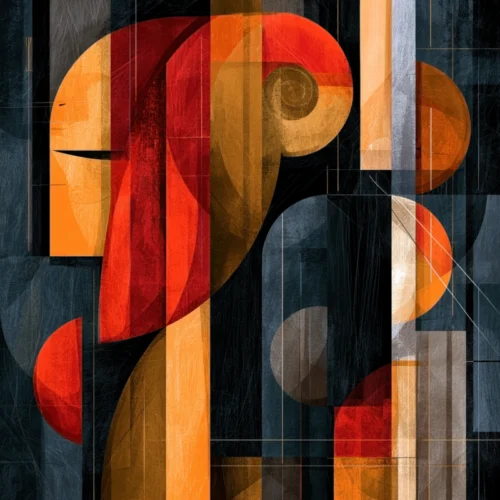
A room can be beautifully furnished and still feel unfinished until one image changes its emotional temperature. Statement wall art for collectors does more than occupy a generous expanse of wall. It establishes a point of view. It gives color a voice, gives architecture a counterpoint, and turns an interior into a setting with memory, tension, and character.
For the collector, the most affecting work is rarely chosen simply because it matches a sofa or fills an empty space. It is chosen because something in the image continues to return the gaze. A luminous abstraction may carry the energy of weather. A flower suspended against black may feel at once intimate and theatrical. A fragmented landscape may hold a familiar place just beyond recognition. This is where decoration gives way to visual presence.
Collect the Image That Alters the Room
A statement piece should not behave like background. Its scale, color, and composition invite a longer look, even from across the room. Yet impact is not the same as noise. The strongest works create a distinct atmosphere without exhausting the eye. They leave space for interpretation, allowing the image to reveal different gestures, textures, and emotional notes as light changes and days pass.
This distinction matters when building a collection. A merely dramatic image can dominate a room for a season; an artwork with genuine visual complexity can remain compelling for years. Look for work in which the initial response is immediate but not final. The first encounter may be color, motion, or form. The lasting connection often arrives through subtler details: a softened edge, a quiet field of shadow, an unexpected trace of the real world beneath a transformed surface.
Photography expanded through digital expression is especially compelling in this respect. The lens begins with an observed moment, but the finished artwork may move far beyond documentation. Reality becomes material rather than destination. A click becomes a vision and impression, shaped by imagination, rhythm, and the artist’s hand.
Statement Wall Art for Collectors Is About Scale
Scale changes both the image and the viewer’s relationship to it. A smaller print can reward close looking, creating the feeling of a private encounter. A large-format work can command the pace of an entire room, placing the viewer inside its color field or visual movement. Neither choice is inherently more collectible. The right scale depends on what role the work should play.
In a quiet library, bedroom, or intimate entry, a concentrated work may create depth without pressing forward. In a living room with broad walls, a loft, reception area, or hospitality setting, larger art can give the architecture a necessary center. The goal is not to make every wall emphatic. It is to understand where an interior needs visual gravity.
Before selecting a piece, stand at the distance from which it will most often be seen. Consider the wall’s width, the ceiling height, sightlines from adjacent rooms, and the negative space surrounding the art. A work that appears suitably bold on a screen may feel timid above a substantial console, while a vivid composition may need a more generous field of wall to breathe. Art benefits from room around it.
Choose Resonance Before Coordination
Color harmony has its place, but exact coordination can make a room feel predetermined. Collectors often create more memorable interiors by choosing art that introduces a deliberate note of contrast. A burnished red may sharpen a restrained neutral palette. A sweep of blue can cool a sun-washed space. Rich floral color can bring life to dark wood, stone, linen, and metal.
Rather than asking whether a work matches everything already present, ask what it awakens. Does it echo one quiet undertone in the room? Does it bring an element that the room lacks – movement, mystery, softness, heat? The most successful relationship may be conversational rather than perfectly harmonious.
This is also why expressive art remains so versatile. An abstract need not depict a familiar place to feel personal. A blossom need not be botanical in the conventional sense to evoke tenderness or vitality. When photographic source material is reimagined through layered color, altered focus, and gestural form, it can speak to an interior without becoming literal.
Let a Collection Hold More Than One Mood
Collectors do not need to commit every room to the same visual language. A home or professional interior gains richness when its artworks create variations in tempo. One room may carry a dark, dramatic floral. Another may open into an airy, kinetic abstraction. A contemplative image from a memory-based series can offer relief after a wall alive with saturated color.
The thread that unifies a collection does not have to be subject matter. It can be sensibility. Perhaps each work possesses an impressionistic dissolution of form. Perhaps vivid color recurs, even as its mood shifts from exuberant to meditative. Perhaps the through line is a shared sense of transformation: observed reality reworked until it feels emotionally truer than the scene from which it began.
Arthur Jacob Impressions is grounded in this kind of visual reimagining. Its photographic and digital works invite collectors to see florals, abstract forms, and remembered places not as fixed subjects, but as fields of sensation. The result is art that can hold its own in a gallery-minded collection while remaining deeply alive in the daily experience of a room.
Consider Diptychs and Triptychs as One Gesture
Multi-panel art offers a different kind of statement. A diptych or triptych creates rhythm across a wall, asking the eye to move through intervals rather than settle on a single central image. This can be particularly effective above a long dining table, behind a sofa, along a corridor, or in a hospitality environment where the wall itself has an extended horizontal presence.
The trade-off is intentionality. Multiple panels need consistent spacing and a clear relationship to surrounding furniture. Hung too far apart, they become separate works that have lost their visual conversation. Hung too close, they can feel compressed. Their power comes from the pause between images, where continuity and fracture meet.
For collectors, these works can also introduce a more cinematic experience. Each panel carries its own visual event, while the complete composition creates a broader atmosphere. The eye travels, returns, and finds correspondences that a single image could not contain.
Give the Work the Conditions to Be Seen
Fine art rewards attention to presentation. Framing should support the work’s character rather than compete with it. A restrained approach often lets color and composition speak with greater authority, while a more architectural frame can lend structure to an image with fluid, expansive movement. The best decision depends on the artwork, the room, and the desired emotional register.
Lighting deserves equal consideration. Natural light can reveal shifts in texture and tonal depth, but direct sunlight may not be the ideal long-term condition for displayed prints. Controlled ambient lighting or thoughtfully placed art lighting allows the work to remain visible after dusk, when a room often becomes more intimate and art takes on greater presence.
Placement matters, too. Art should generally meet the viewer at a comfortable visual height, but rules are useful only until the room asks for something else. Above furniture, the relationship between object and artwork matters more than a rigid measurement. In a stairwell, a tall vertical composition may follow the rise of the architecture. In an entry, a single commanding piece can offer a first impression that feels unmistakably personal.
Buy What Continues to Speak
Collecting is not a test of expertise. It is a practice of attention. The work worth living with often resists a quick explanation while making an immediate emotional claim. It might remind you of a place without depicting it. It might feel joyous, unsettled, sensual, or serene. The important question is not whether every viewer will respond in the same way. It is whether the work remains vivid in your own imagination.
Give yourself permission to choose art that changes the room because it has already changed something in you. Let it be the color you cannot forget, the image that makes a familiar wall feel newly charged, the visual presence that keeps opening long after it has found its place.