
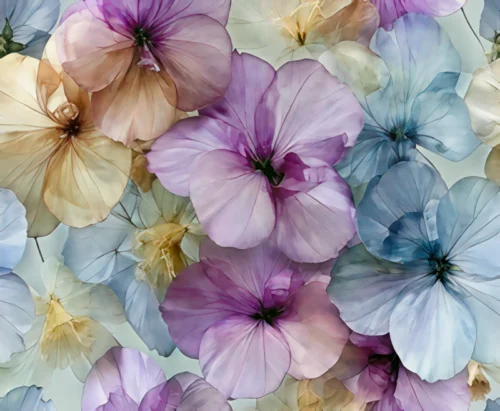
A room can be beautifully furnished and still feel unfinished. Then a single work of art arrives – not as decoration, but as presence. That is the quiet power of photography and digital art prints when they are created with an artist’s eye. They do more than fill a wall. They alter atmosphere, sharpen identity, and give a space its emotional center.
For many collectors and design-minded buyers, the appeal begins with familiarity. A photograph offers a trace of the visible world – a blossom, a horizon, a fragment of architecture, a fleeting gesture of light. Digital intervention then shifts that reality into something more interpretive, more sensorial, more fully composed as art. The result is not documentation. It is transformation.
What sets photography and digital art prints apart
The phrase photography and digital art prints can suggest two separate categories, but the most compelling work often lives in the conversation between them. Photography brings origin, atmosphere, and a tangible point of reference. Digital artistry introduces movement, texture, abstraction, and a more deliberate emotional pitch. Together, they create images that feel both discovered and invented.
This distinction matters because many buyers are not looking for a literal scene. They are looking for resonance. They want a piece that holds attention from across the room and reveals greater complexity at closer range. A straightforward photograph may offer clarity. A purely digital composition may offer imagination. A print that fuses both can deliver a rarer balance – the intimacy of something seen and the sophistication of something reimagined.
That balance is especially powerful in contemporary interiors. Clean architectural spaces often benefit from art with visual depth and layered feeling. Traditional rooms can be refreshed by a work that introduces bold color or altered perspective without feeling disconnected from the natural world. In both cases, the artwork becomes a bridge between structure and emotion.
The difference between image-making and art-making
Not every striking image becomes a memorable print. What separates decorative visuals from collectible wall art is intention. In fine art practice, the image is not simply captured and reproduced. It is shaped. Color is not only corrected, but composed. Contrast is not only technical, but expressive. Form is not only present, but emphasized to create rhythm, tension, softness, or release.
This is where many buyers instinctively sense quality even if they do not describe it in formal art terms. They respond to work that feels resolved. The piece has an internal logic. It carries mood. It seems to breathe on the wall rather than sit flat against it.
An artist working in this space is not asking, “What did the camera record?” The more revealing question is, “What can this image become?” That shift changes everything. A flower can become an atmosphere. Water can become gesture. Light can become memory. The familiar is not erased. It is elevated into a more expressive visual language.
Why these prints work so well in interiors
Interior designers and private collectors often face the same challenge: finding art that feels distinctive without becoming rigid or overly academic. Photography-based digital art meets that need with unusual grace. It has enough structure to feel intentional and enough abstraction to remain open.
That openness is valuable in lived spaces. A print that is too descriptive can close down interpretation. It tells the viewer exactly what to see and, after time, exactly what to feel. By contrast, a more impressionistic work keeps unfolding. It changes with the light in the room, with the season, with the viewer’s own state of mind.
There is also a practical elegance to the medium. Photography and digital art prints can present saturated color, subtle tonal gradation, and finely articulated texture with remarkable clarity. This makes them especially effective in spaces where the artwork needs to carry visual energy – entryways, living rooms, offices, hospitality settings, and long transitional walls that need more than a placeholder object.
Multi-panel compositions add another dimension. A diptych or triptych can create rhythm across a larger surface and allow a work to breathe architecturally. Instead of one contained image, the eye moves between panels, completing the gesture. This can make the art feel more immersive, particularly in contemporary rooms where scale and spacing are part of the visual experience.
Choosing photography and digital art prints with staying power
Buyers often ask themselves a simple question: will I still want to live with this piece years from now? That question is wiser than it sounds. Art with staying power usually offers both immediate attraction and deeper complexity.
Immediate attraction may come through color, dramatic contrast, or a strong compositional silhouette. Deeper complexity comes from ambiguity, layering, and emotional tone. The strongest pieces do not surrender everything at first glance. They invite return.
When choosing a print, it helps to look beyond subject matter alone. A floral work, for example, may not be about botany at all. It may be about luminosity, sensuality, or softness against darkness. An abstract image may not be about deciphering meaning. It may be about movement, pulse, and visual temperature. Buyers who respond to art this way tend to make better choices because they are selecting not just what the image shows, but what the image does.
It also helps to consider the role the piece will play in the room. Some works are anchors. They establish the emotional and chromatic direction of a space. Others are quieter, providing depth and continuity without taking over. Neither role is inherently better. It depends on the room, the architecture, and the collector’s appetite for visual intensity.
The appeal of art that reinterprets reality
There is a reason so many sophisticated buyers are drawn to work that begins in photography but does not end there. We live surrounded by literal images. Phones, screens, feeds, and advertisements constantly present the visible world in instant, disposable form. Fine art offers another experience altogether. It slows perception. It asks for attention. It restores mystery.
A print that reinterprets reality feels more aligned with memory than with record. Memory is selective, heightened, and emotionally edited. It distills. It exaggerates. It lingers on color, gesture, and sensation while letting exact fact dissolve. The most evocative photography-based digital artwork operates in that same territory.
That is why such work can feel deeply personal even when the subject is universal. A blossom against black may evoke intimacy, drama, or stillness. A blurred field of color may suggest weather, music, or a half-remembered place. The art does not dictate a single response. It creates conditions for one.
At Arthur Jacob Impressions, this philosophy is central: a click becomes not merely an image, but an impression shaped through vision, color, and expressive form. For collectors and designers alike, that shift is what gives a print its lasting charge.
Collectibility, credibility, and emotional force
Collectors and serious art buyers tend to look for more than visual appeal. They want authorship. They want a clear point of view. They want work that carries the coherence of a practice rather than the randomness of trend-driven décor.
This does not mean art must be difficult to be credible. In fact, some of the most successful fine art prints are immediately beautiful. The difference is that their beauty is intentional, not generic. It emerges from a recognizable artistic sensibility – a way of seeing, editing, transforming, and composing that belongs to one maker.
That authorship matters in a market crowded with interchangeable imagery. Original photography and digital art prints stand apart when they bear the mark of a singular imagination. They feel less like products and more like works chosen into one’s life.
For designers, this credibility supports stronger presentations and more memorable interiors. For individual collectors, it creates a more intimate kind of ownership. The piece becomes part of how a home speaks.
The best wall art does not ask for constant explanation. It simply continues to give. Morning light may draw out one palette, evening another. A guest may notice movement where the owner has always noticed calm. Over time, the artwork becomes woven into the emotional architecture of the room.
If you are choosing art for a space that deserves more than the expected, look for work that does not merely represent the world, but reshapes it into feeling. That is where a print begins to live beyond the wall.