
A modern interior can be beautifully resolved and still feel unfinished until art gives it a pulse. The best art styles for modern interiors do more than fill an open wall: they introduce rhythm, atmosphere, and a point of view. They make a room feel collected rather than assembled.
Modern design is not one fixed look. A quiet, pale living room and a dramatic city loft may both be modern, yet they call for very different visual energy. The strongest choice is rarely about matching every color in the room. It is about choosing an artwork whose movement, scale, and emotional temperature deepen the architecture around it.
1. Expressive Abstracts for Energy and Freedom
Abstract art is often the natural language of modern interiors because it leaves room for interpretation. Rather than describing a place or object, it works through color, gesture, texture, and form. A sweeping field of saturated blue can cool a sunlit room. A surge of crimson or gold can turn a restrained palette into something charged and memorable.
For contemporary spaces with clean-lined furniture, expressive abstracts offer a necessary counterpoint. Their spontaneity softens precision. Their layered surfaces prevent a room of glass, polished stone, and tailored upholstery from becoming overly controlled.
The trade-off is intensity. A highly active abstract can overpower a compact room if every other surface is equally emphatic. Let it lead. When the art carries movement, surrounding textiles and objects often benefit from a quieter hand.
2. Botanical and Floral Art With a Contemporary Edge
Florals belong in modern interiors when they feel discovered rather than decorative. A close-cropped blossom, a dramatic stem, or a garden transformed through rich digital texture brings organic life without requiring a traditional setting. The subject is familiar, but the treatment can be entirely unexpected.
This style is especially compelling in bedrooms, dining rooms, and reception areas where a sense of welcome matters. A floral work can introduce softness to angular architecture while retaining visual sophistication. Look for pieces in which petals become abstract gestures, color seems to bloom from shadow, or a photographic image dissolves into painterly atmosphere.
Contemporary floral art also gives designers an elegant way to bridge styles. It can sit comfortably beside sculptural lighting, mid-century silhouettes, or spare European-inspired furnishings. The key is to avoid overly literal, overly sweet imagery. Choose a work with depth, contrast, and a distinct artistic hand.
3. Blossoms on Black for Dramatic Contrast
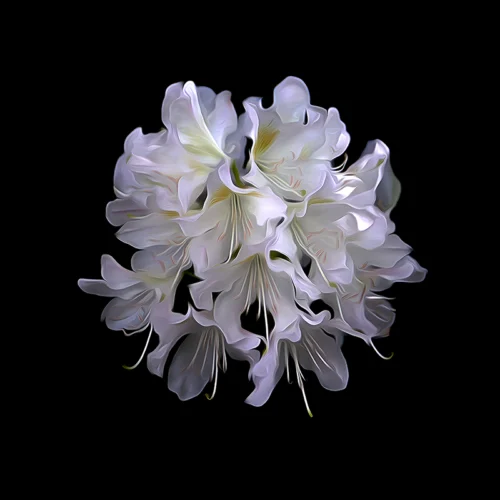
Few styles create presence as immediately as luminous blossoms against a black ground. The effect is theatrical, but not necessarily loud. Darkness creates visual silence around the form, allowing color and detail to emerge with remarkable clarity.
In a modern interior, black-background florals can anchor a wall much as a fireplace or large window does. They are particularly effective in spaces with warm woods, brass, charcoal upholstery, creamy plaster, or deep jewel tones. A single large print can bring a cinematic quality to an entryway, dining room, or intimate lounge.
This style asks for confidence. In an already shadowed room, it may deepen the mood beyond what the space needs. Where natural light is limited, consider artwork with radiant petals, high color contrast, or reflective framing so the composition retains its inner light.
4. Impressionistic Photography That Reimagines Reality
Photography does not have to be documentary. When a lens-based image is altered through motion, multiple exposures, selective focus, or digital manipulation, it can become something closer to a remembered sensation than a record of a moment.
This is one of the most versatile art styles for modern interiors because it holds both familiarity and mystery. A viewer may recognize flowers, water, architecture, or a passing figure, yet encounter them through a veil of color and movement. The work feels grounded in reality while refusing to be limited by it.
For collectors who want art with visual sophistication but an accessible emotional entry point, impressionistic photography is a powerful choice. It offers narrative without becoming literal. Arthur Jacob Impressions works in this fertile space, where the camera’s observation becomes an expressive visual impression shaped by imagination.
5. Architectural and Urban Abstractions
Modern rooms often respond beautifully to art drawn from the visual vocabulary of the city: grids, facades, reflections, intersections, and the changing geometry of light. Yet the most compelling urban works do not merely depict a skyline. They find abstraction within it.
A blurred crosswalk, fractured reflection, or close view of weathered concrete can echo the materials and lines of a contemporary home. These works are especially suited to offices, hallways, lofts, and professional interiors where a crisp visual structure feels appropriate.
Consider the mood carefully. Black-and-white architectural imagery can create a tailored, editorial effect, while urban work in vivid color feels more kinetic and personal. Neither is inherently more modern. The decision depends on whether the room needs restraint or a spark of unpredictability.
6. Color-Forward Art as a Spatial Tool
Color is not merely an accent in modern interiors. It can alter the perceived temperature and scale of a room. Cool blue and green works often make a space feel calmer and more expansive. Ochre, coral, and red bring intimacy and visual warmth. A multicolored composition can connect separate elements in an open-plan room without turning the design into a color-matching exercise.
The finest color-forward art has more to offer than a palette pulled from the sofa. It creates its own internal world. A complex image may contain tones that quietly echo the interior while introducing one surprising note that makes the entire room feel more alive.
If the space already contains bold rugs, patterned upholstery, or highly veined stone, a more limited color palette may be wise. If the room is neutral from floor to ceiling, a vivid artwork can become the moment of release. Let the art bring intentional contrast, not visual clutter.
7. Diptychs and Triptychs for Scale and Rhythm
Multi-panel art has a particular affinity with contemporary architecture. A diptych or triptych creates intervals across a wall, allowing the eye to travel through the composition and across the room. This measured rhythm can make a long wall feel more considered than a single isolated piece would.
A triptych works beautifully above a low console, along a dining-room wall, or in a broad corridor. A diptych can frame a seating area with graceful symmetry while retaining the expressive depth of fine art. Because the panels share one visual language, they create scale without requiring an oversized monolith.
Spacing is essential. Panels set too far apart lose their relationship; panels crowded together can feel accidental. Think of the negative space between them as part of the artwork. It is the pause that gives the composition breath.
How to Choose Art for a Modern Room
Before selecting a style, stand in the room and identify what is missing. Does it need warmth, movement, serenity, or a focal point strong enough to hold the furniture arrangement together? This question is more useful than asking what color would match.
Then consider viewing distance. Intricate photographic detail rewards close looking in a hallway or intimate sitting room. Large, gestural abstractions are often best experienced from across a living room or open space. Scale should feel deliberate: art that is too small can make even an elegant room feel tentative.
Finally, choose work that continues to reveal itself. Modern interiors are often edited with care, which means each artwork has room to matter. The right piece will not simply coordinate on installation day. It will shift with morning light, evening conversation, and the changing attention of everyone who enters the room.
Choose the artwork that gives the space a feeling no furnishing can supply: a lingering sense of motion, beauty, or recognition. That is when a wall becomes part of the life unfolding around it.
Leave a Reply