
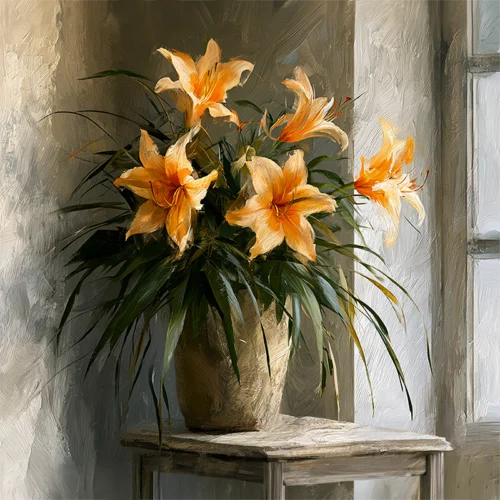
The dining room asks more of art than almost any other room. It is where candlelight alters color, glassware catches reflections, and conversation gathers its own momentum. The best wall art for dining rooms does not simply fill an empty wall. It gives the room a visual pulse, creating an atmosphere that remains present long after the last plate has been cleared.
A compelling work can make a formal dining room feel less fixed and more alive. In a relaxed breakfast nook, it can introduce the sense of occasion that turns an ordinary meal into a small ritual. The right choice is not dictated by one style, subject, or palette. It begins with an understanding of the emotional temperature you want the room to hold.
Choose Art That Sets the Table Emotionally
Before considering dimensions or frames, consider the feeling you want guests to encounter when they sit down. A dining room is a space of attention. The art should reward a lingering glance without demanding all of it.
For an atmosphere of generosity and warmth, floral imagery and saturated abstracts are natural companions to dining. They echo the abundance of a table without becoming literal decoration. A floral work with layered color may bring softness to architectural furniture, while an abstract composition can introduce movement and energy into an otherwise restrained room.
For a more dramatic setting, dark grounds, luminous blossoms, or photographic impressions with deep contrast create a sense of evening theater. Black can be especially effective behind a dining table because it gives color a place to flare. A blossom illuminated against darkness can feel both intimate and grand, particularly when paired with warm wood, brass, or low, directional light.
The trade-off is intensity. A highly charged work can transform a quiet room, but it may compete with patterned wallpaper, ornate upholstery, or a crowded display of objects. If the furnishings already carry strong visual rhythm, choose art with a more edited composition. Let one element lead.
The Best Wall Art for Dining Rooms Has Presence
Scale is not a technical afterthought. It is part of the artwork’s emotional force. A piece that is too small above a substantial dining table can appear hesitant, no matter how beautiful the image. A generous work, by contrast, gives the room a center of gravity.
As a useful visual principle, artwork above a sideboard or buffet should generally occupy a meaningful portion of the furniture’s width rather than floating as a small accent in the middle. Above the dining table itself, consider the sightlines from seated positions. Art should feel visible and intentional, not so high that it becomes disconnected from the life of the room.
Large-scale art is often the answer for a single uninterrupted wall. One expansive image allows color, texture, and gesture to register from across the room. It can also make a compact dining space feel more deliberate, lending it the composure of a gallery rather than the compression of a pass-through area.
Yet a large wall does not always require a single large work. A diptych or triptych introduces sequence. Multiple panels can suggest motion, changing light, or a visual story unfolding across the wall. This format is especially compelling in long dining rooms, where the horizontal architecture invites the eye to travel. The intervals between panels become part of the composition, allowing the surrounding wall to breathe.
Let the Architecture Inform the Arrangement
A symmetrical room often welcomes a centered statement piece or a balanced multi-panel work. In a more informal space, a slightly unexpected arrangement can feel more natural. A vertical work beside a banquette, for example, can add lift where ceilings feel low. A horizontal panorama over a console can visually widen a narrow room.
Pay attention to what happens across from the artwork as well. A mirror, a window, or a bank of glass doors will reflect and alter the piece throughout the day. This is not a problem to avoid. It is an opportunity to select art whose color and texture gain dimension in changing light.
Color Should Converse, Not Coordinate Perfectly
The most memorable dining rooms rarely rely on exact color matching. When every tone is repeated too precisely, the room can feel composed but lifeless. Art works best when it enters a conversation with the interior, picking up a note from the rug, the ceramics, or the grain of the table while adding a new register.
A room in quiet neutrals may come alive with a print charged by cobalt, vermilion, emerald, or gold. In that setting, art becomes the source of visual voltage. Conversely, a dining room with vivid chairs or richly colored walls may benefit from work that contains complexity but leaves enough open space for the room’s own palette to speak.
Look beyond color names and notice temperature. Blue can be cool, but an inky blue layered with violet and amber can feel enveloping rather than distant. Red can be exuberant or severe depending on its neighboring tones. Photographic and digital artwork that reinterprets a scene through texture, blur, abstraction, and expressive color often gives a dining room this deeper kind of chromatic resonance.
At Arthur Jacob Impressions, the transformation of lens-based imagery into impressionistic visual art offers a particularly rich approach for dining spaces. The work carries traces of reality while moving beyond documentation, allowing a floral subject, a memory of place, or an abstract gesture to remain open to interpretation at the table.
Select a Subject With Room for Conversation
Dining room art does not need to depict food, wine, or dining itself. In fact, those familiar motifs can make a room feel overly themed. More evocative subjects tend to last longer because they leave space for personal association.
Florals are enduring because they bring life, seasonality, and sensual form to the room. But the most effective floral art is not merely decorative. Seek work with movement, unexpected cropping, deep shadow, or an energized color field. Such images can feel contemporary in a traditional dining room and soften a modern one.
Abstract art is equally well suited to gatherings. Its meaning is not fixed, so different viewers can bring their own reading to it. A swirling composition may suggest water, weather, music, or memory depending on who is looking. That ambiguity is a virtue in a room designed for exchange.
Landscape-derived work can create a quieter mood, especially where the dining room needs an imagined horizon. Choose pieces that interpret place rather than describe it too literally. A softened shoreline, an atmospheric garden, or an altered city memory can extend the room beyond its four walls without turning it into a travelogue.
Framing and Light Complete the Impression
A frame should support the work’s character and the room’s materials. A slim black frame can sharpen a vivid contemporary print. Natural wood may draw out warmth and organic texture. A pale frame can give airy imagery a more expansive presence. The goal is not to make the frame disappear, but to make it feel inevitable.
Lighting deserves the same consideration. Dining rooms often look their best in the evening, which means art should be evaluated under artificial light as well as daylight. A focused picture light can reveal texture and color after sunset, while dimmable ambient lighting preserves the intimacy of the meal. Avoid placing a work where a harsh fixture creates a persistent glare across its surface.
If the room receives strong daylight, note how the art changes at morning, noon, and late afternoon. Work with tonal depth will continue to reveal itself as conditions shift. That variation gives the dining room a living quality, as though the walls participate in the passing day.
Resist the Urge to Fill Every Wall
A dining room benefits from visual pauses. One substantial piece may carry more authority than a scattered collection of smaller works. This is especially true when the room already includes a chandelier, china cabinet, sculptural chairs, or a patterned rug. Art needs space around it to gather force.
There are exceptions. An intimate dining room can be wonderfully personal with a carefully edited salon arrangement, particularly if the works share a thread of color, subject, or framing. The difference lies in intention. A collection should feel assembled over time, not distributed to eliminate blank wall space.
Choose the work that changes the room before the guests arrive. When the table is bare and the chairs are still, it should already suggest warmth, curiosity, drama, or calm. Then, once the room fills with voices and light, the art will do what lasting art does best: hold the atmosphere without ever needing to ask for attention.
Leave a Reply