
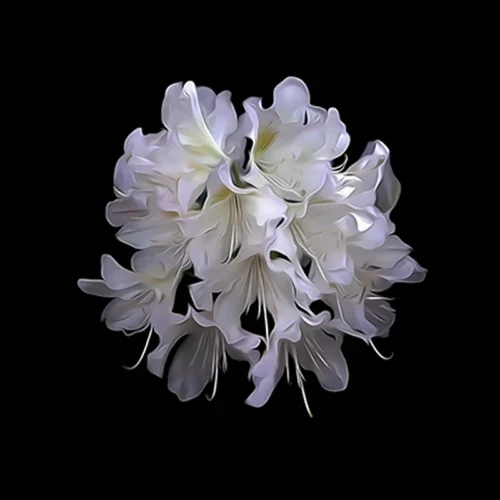
A photograph of a blossom can preserve a moment. Transformed through color, texture, rhythm, and imagination, it can become something more: an invitation to pause, feel, and see familiar forms anew. So, can digital artwork be fine art? Absolutely. The medium does not diminish the artistic act. What matters is the vision guiding it, the originality of the finished work, and the care with which it enters the world.
For collectors and designers, this question is more than a point of art-world terminology. It shapes how a piece is understood in a room. A work that carries the artist’s hand, even when created with a camera and digital tools, can bring the emotional gravity and visual distinction expected of fine art.
Can Digital Artwork Be Fine Art? It Begins With Intention
Fine art is not defined by whether an artist holds a brush, a camera, or a stylus. It is defined by intention. Fine art begins when an artist makes choices that move beyond simple recordkeeping or decoration: what to reveal, what to obscure, where to intensify color, how to shift scale, and which emotional note the work should hold.
A digital file can be a quick image made for a screen. It can also be the foundation of a considered artwork developed through dozens of visual decisions. The distinction is not the technology. It is the presence of authorship.
This is especially clear in digital work rooted in photography. The lens may capture light, shape, and a fleeting fragment of reality, but the artist can then reinterpret that source material until it carries a different kind of truth. A flower becomes an atmosphere of saturated color. Reflected water becomes a field of movement. An ordinary architectural detail becomes an abstract composition with pulse and weight.
The final image need not resemble the original scene closely to remain authentic. Its authenticity lies in the artist’s distinct way of seeing.
The Artist’s Hand Is Still There
Some viewers assume digital art is less personal because software assists in its creation. Yet tools have always influenced art. Paint chemistry changed painting. New printing processes changed graphic art. Photography reshaped composition, portraiture, and the very idea of realism. Digital methods belong to that same continuing history of artists extending their visual language.
The artist’s hand is not limited to a visible brushstroke. It appears in selection, restraint, timing, cropping, layering, tonal balance, and the decision to stop. It is present in the ability to recognize potential in an image others might pass by. A compelling digital artwork bears evidence of these choices, even when its surface is polished, fluid, or impossible to achieve by traditional means.
That is why originality matters so deeply. Fine art is not simply an attractive effect applied to a stock image or a repeated template. It is a personal visual statement. The work should feel inseparable from the sensibility that made it.
For Arthur Jacob Impressions, photography is not treated as an endpoint. A click becomes a vision and impression. Lens-based imagery is reworked into expressive compositions where vivid color, motion, and texture carry the experience beyond documentation.
Craft Extends Beyond the Screen
A fine art digital work is not finished merely because it looks complete on a monitor. Its physical realization matters. Scale, paper or canvas selection, inks, tonal depth, detail, and finishing all influence how the work is perceived. A glowing composition that feels alive at intimate scale may require a different approach when it is intended to command a large entryway or hospitality interior.
This is where the difference between a digital image and a fine art print becomes especially meaningful. The digital artwork is the creative source. The print is its material presence. When handled with discernment, that presence allows the image to hold light, color, and detail in a way that rewards sustained looking.
Museum-style presentation also changes the conversation. It asks the viewer to encounter the work as an object of attention rather than as disposable visual content. Framing, placement, and proportion give it a role within an interior, but they also honor the labor behind it.
There is a practical consideration here for buyers: not every reproduction is equal. A work may be visually beautiful online but lose its depth through weak tonal reproduction, poor materials, or careless finishing. Collectible fine art depends on fidelity to the artist’s intended image. The physical print should preserve the atmosphere that made the original compelling.
Why Digital Fine Art Belongs in Collected Interiors
Digital fine art is particularly at home in interiors because it can unite expressive freedom with a strong sense of design. It offers color stories that can either converse quietly with a room or become its central visual event. It can be expansive and architectural, intimate and lyrical, or richly dramatic against a dark ground.
For an interior designer, a single large-scale abstract may establish movement across a calm, tailored space. A floral work can bring softness without becoming sentimental. A diptych or triptych can create a deliberate rhythm along a long wall, giving an interior a sense of continuity rather than filling empty space with unrelated objects.
The best pieces do more than match a palette. They alter the emotional temperature of a room. A vibrant field of color can energize a lobby or creative workplace. A luminous, layered image can offer a moment of reflection in a bedroom, study, or private residence. Art earns its place when it continues to reveal something after the first impression.
Digital methods offer artists unusual latitude in this regard. They can build nuanced transitions, unexpected juxtapositions, and visual textures that would be difficult to produce otherwise. That freedom is valuable when it serves a clear artistic purpose. More effects do not automatically create more meaning. Often, the strongest work is distinguished by editing: knowing what to heighten and what to leave quiet.
The Question of Edition, Scarcity, and Value
A common hesitation around digital art concerns reproducibility. Because a digital source can be printed more than once, some assume it cannot possess the integrity associated with collectible art. But reproducibility has long been part of respected fine art practice. Printmaking, photography, and other edition-based forms each have their own traditions of authorship and controlled production.
What gives a digital fine art print significance is not artificial rarity alone. It is the relationship between an original artistic vision, a thoughtfully managed edition practice, and a finished object made to endure. The collector is not acquiring a random duplicate. They are bringing an artist’s resolved image into their environment.
This does not mean every digital work should be treated as fine art. A decorative graphic may be attractive without claiming deeper artistic ambition. An image generated without personal direction, or endlessly replicated without attention to quality, may not offer the same sense of authorship or permanence. The category is earned through vision and practice, not granted by a file format.
Looking at Digital Art With a Collector’s Eye
When considering a digital artwork, begin with your response. Does the piece hold your attention beyond its immediate color or subject? Is there structure beneath the surface – an interplay of line, negative space, texture, and movement that keeps the eye engaged? Does it suggest a point of view rather than simply following a trend?
Then consider the artist’s process. A meaningful body of work often reveals recurring concerns: a fascination with blossoms emerging from darkness, a sensitivity to gestural blur, a drive to turn memory into abstraction, or a particular relationship to light. These recurring threads create coherence. They allow individual works to stand alone while also belonging to a larger artistic conversation.
Finally, picture the work in the space it will inhabit. Fine art should not be chosen only as a finishing touch. Give it room to breathe. Let its scale, visual energy, and emotional register participate in the architecture of the room. A considered placement can make a work feel inevitable, as though the space had been waiting for it.
Digital artwork becomes fine art when technology is placed in service of perception, imagination, and disciplined craft. Choose the work that keeps speaking after the room has gone quiet. That enduring reverberation is where a digital image becomes an experience worth living with.
Leave a Reply