
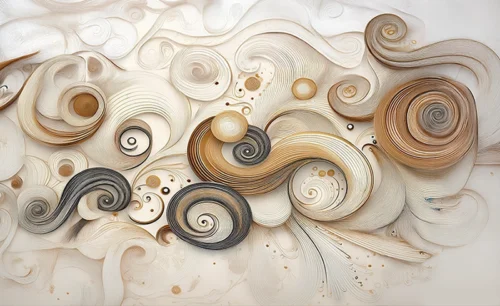
A room can be beautifully furnished and still feel strangely untouched. Then one artwork enters the space, and the atmosphere changes. That is the particular force of emotional abstract wall art – it does not merely decorate a wall, it alters the emotional temperature of the room.
Unlike literal imagery, abstract work does not tell you exactly what to see. It leaves room for sensation, memory, and personal association. A sweep of color can feel like relief. A blurred form can suggest motion, distance, or longing. Texture can create tension or calm without ever naming the source. For collectors, designers, and visually attuned homeowners, this is often the difference between pleasant décor and art that truly holds presence.
What emotional abstract wall art does differently
The most memorable abstract pieces are not random arrangements of shape and color. They are structured experiences. They carry rhythm, pressure, atmosphere, and release. Even when the subject has been transformed beyond recognition, the work still communicates through visual sensation.
That is why emotional abstract wall art often feels so immediate in an interior. It meets the viewer before language does. You may not identify a landscape, a flower, or a figure in a conventional sense, yet you respond instinctively to movement, contrast, luminosity, and scale. The artwork becomes less about representation and more about reverberation.
This is especially true when photography is reimagined rather than simply presented. A lens can capture a moment, but an artist’s intervention can turn that moment into an impression – something less descriptive and more evocative. Reality softens. Form begins to dissolve. Color takes on a heightened role. The result feels more like memory than documentation, which is often where emotional connection begins.
Why abstraction can feel more personal than realism
Realism offers clarity. Abstraction offers participation. That distinction matters.
When an artwork states everything plainly, the viewer has less room to enter it. Emotional abstraction invites a more intimate exchange. One person sees turbulence where another sees freedom. One viewer reads stillness in a dark field of blue, while another feels depth, distance, or introspection. The piece becomes active in the room because it continues to unfold through the viewer’s own emotional history.
This openness is not vagueness. Strong abstract work is disciplined. Composition still matters. So do tonal balance, edge, gesture, and visual weight. But instead of insisting on one fixed reading, it allows resonance to develop over time. That quality makes it especially powerful in spaces where people live, work, gather, or reflect.
In a residence, abstract art can soften an overly polished room or lend sophistication to a more casual one. In a professional interior, it can create atmosphere without becoming overly thematic. In hospitality settings, it can shape a memorable visual identity while remaining accessible to many different viewers. Its flexibility is one of its great strengths, but only when the work itself has emotional integrity.
The visual language behind emotional impact
Certain formal elements consistently shape how abstract art is felt. Color is often the first to register. Saturated reds and orange tones can energize a space, while layered blues, grays, and deep neutrals tend to slow the eye and quiet the room. High contrast creates drama. Tonal subtlety creates contemplation.
Movement is equally powerful. A composition with sweeping diagonals or blurred transitions can feel cinematic, almost musical. It suggests passage, weather, momentum, or release. By contrast, a more centered, still arrangement can lend gravity and poise. Neither is inherently better. It depends on what the room needs and what the collector wants to live with each day.
Texture adds another dimension. In fine art prints derived from photographic and digital processes, texture can be rendered with remarkable sensitivity. It can suggest paint-like density, atmospheric haze, veiling, fracture, or softness. These qualities help a work feel less mechanical and more embodied. They remind the viewer that the image has been interpreted, not merely captured.
Scale also changes emotional effect. A small abstract can create intimacy and concentration. A larger piece can become architectural, setting the emotional register of the entire room. Multi-panel works bring yet another possibility. Diptychs and triptychs introduce pause, rhythm, and visual breathing space, which can deepen the expressive field without overwhelming it.
Choosing emotional abstract wall art for an interior
The best approach is not to ask, “What matches my sofa?” A more useful question is, “What should this room feel like?”
If the goal is serenity, look for compositions with tonal depth, measured movement, and a sense of visual exhale. If the room needs energy, stronger color interplay and directional motion may be more compelling. If the interior is highly structured, an expressive abstract can introduce needed elasticity. If the space is already layered and eclectic, a more distilled piece may give the eye a place to rest.
There are trade-offs. A dramatic work can give a room its identity, but it may also demand more visual restraint elsewhere. A subtle piece may reward repeated viewing, though it can disappear if surrounded by too many competing elements. This is why placement matters as much as selection.
Consider sightlines first. Art should have room to speak. A major piece deserves enough wall space to establish presence, especially in entryways, living rooms, dining areas, and primary bedrooms. In offices and reception spaces, emotional abstraction can project refinement without feeling overly literal or corporate. It creates visual intelligence in a way that generic décor rarely does.
Framing and presentation matter too. Museum-style display sharpens the authority of the work and signals that the piece is meant to be considered, not simply filled into a blank wall. For collectors and designers, that distinction is crucial. Presentation shapes perception.
Emotional abstract wall art in contemporary collecting
There is a reason abstract work continues to hold such lasting relevance in contemporary interiors. It moves fluidly between art and design without becoming subordinate to either. It can stand as a collectible object while also transforming how a room is experienced.
For today’s art buyers, that dual role is increasingly appealing. People want work that is aesthetically sophisticated, emotionally compelling, and versatile enough to live with over time. They want originality, not formula. They want pieces that feel considered and distinctive, with enough complexity to remain engaging after the first impression.
This is where artist-driven fine art prints have particular strength. When photographic imagery is fused with digital transformation in a genuinely expressive way, the result can occupy a rare space – grounded in the real world, yet freed from its limits. A click becomes an impression. A document becomes atmosphere. A familiar subject becomes newly felt.
Arthur Jacob Impressions approaches the image in precisely this spirit, treating photography not as an endpoint but as the beginning of visual transformation. That sensibility gives abstract work a vivid emotional life, shaped by color, motion, and layered form rather than strict representation.
Living with art that keeps opening
Some works are instantly likable and quickly exhausted. Others continue to reveal themselves. Emotional abstract art belongs to the second category when it is made with conviction.
Over time, the viewer begins to notice more: the quiet interval between forms, the way one hue pushes against another, the hidden balance inside apparent spontaneity. The artwork changes with light, season, mood, and context. Morning can make it feel lucid. Evening can make it feel private and inward. In this way, the piece becomes part of lived experience rather than a fixed visual object.
That enduring quality is often what separates meaningful wall art from something merely fashionable. Trends move quickly. Emotional resonance does not. An abstract work with real depth can remain contemporary for years because it is not dependent on novelty. It is rooted in sensation, structure, and imagination.
The right piece should not answer every question at once. It should give the eye somewhere to return, and the room a deeper life around it.