
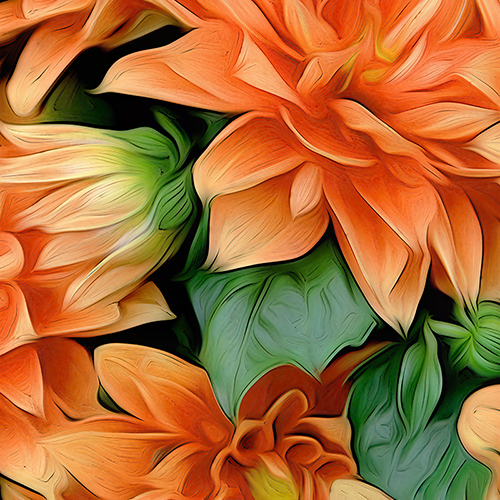
A blank wall rarely stays blank for long. In a well-considered interior, it begins to ask for something – not merely decoration, but presence. This is where fine art prints hold their power. They do more than fill space. They shape atmosphere, direct the eye, and introduce a visual language that can make a room feel quieter, bolder, warmer, or more alive.
For collectors, designers, and homeowners with a strong visual instinct, the appeal is not simply that a print is beautiful. It is that the right print can alter the emotional register of an interior. A room with ordinary décor may feel finished. A room with artwork that carries imagination, movement, and depth begins to feel authored.
Why fine art prints feel different
Not all wall art asks the same of the viewer. Mass-produced décor tends to confirm what is already familiar. It matches a palette, echoes a trend, and stays comfortably in the background. Fine art prints work differently. They are chosen not only for coordination, but for character.
That distinction matters. A fine art print carries the artist’s eye, sensibility, and intent. Even when the subject begins in the visible world – a blossom, a landscape fragment, a passing memory, an abstracted form – the finished work can become something more interpretive and resonant. It does not simply document. It transforms.
This is often what draws people toward collectible print work over generic wall décor. The image has tension, atmosphere, and an internal rhythm. It can hold attention at a distance, then reveal nuance as you move closer. Color is not merely applied. It is composed. Texture is not accidental. It contributes to mood.
Fine art prints as emotional architecture
The strongest interiors are not built by furniture alone. They rely on contrast, pacing, and focal points. Art enters that equation as a kind of emotional architecture. It can soften a formal room, bring sophistication to a minimalist space, or introduce dramatic energy where the architecture itself is restrained.
A floral image rendered with unusual depth or saturated color can become less about botany and more about gesture, abundance, and sensuality. Abstract work may supply movement in a room defined by clean lines and quiet materials. Multi-panel compositions can widen a visual field and create a cadence across a larger wall. These are not minor decorative effects. They influence how a space is perceived and remembered.
This is especially relevant in interiors that need to feel curated rather than assembled. In residential settings, art often becomes the detail that makes a home feel personal instead of staged. In professional spaces – offices, hospitality environments, reception areas, and client-facing interiors – it communicates taste, confidence, and point of view without saying a word.
The role of transformation in contemporary print art
One of the most compelling shifts in contemporary wall art is the movement away from straightforward representation. Viewers are often less interested in literal description than in visual interpretation. They want work that suggests a feeling, a memory, or an atmosphere they cannot entirely name.
That is where artist-driven photographic and digital processes have become especially significant. When lens-based imagery is reimagined through manipulation, layering, tonal shifts, and expressive treatment, the result can move beyond photography into something more painterly, immersive, and impressionistic. The image still carries the authority of the captured world, but it is no longer limited by it.
This approach gives fine art prints a particular richness. It allows color to become more luminous, motion more suggestive, and form more evocative. For the viewer, the experience is often immediate. The work feels recognizable, yet altered enough to stir curiosity. It asks you to see again.
At Arthur Jacob Impressions, this philosophy is central – not reality repeated, but reality transformed into visual impression. That difference is what makes a piece feel less like a record and more like an encounter.
Choosing fine art prints for a collected interior
Selecting art is partly intuitive and partly architectural. The most successful choices tend to respect both. A print should speak emotionally, but it should also understand the room it enters.
Scale is usually the first consideration. A small work can be exquisite, yet disappear on a broad wall. A large-format print can anchor a room beautifully, but in a compact setting it may overpower the surrounding furnishings. The goal is not strict symmetry. It is balance.
Color comes next, though not always in the expected way. Some buyers look for artwork that matches a room. Often the stronger choice is a print that expands it. If an interior is restrained – stone, linen, charcoal, soft wood – an artwork with vivid chromatic life can become the pulse of the space. If a room already has visual intensity, a quieter piece with tonal subtlety may create needed breathing room.
Subject matter also depends on how the room is meant to feel. Abstract compositions tend to invite interpretation and work well where openness and movement are desired. Florals and blossoms can bring intimacy, elegance, and organic form. Memory-inflected imagery often introduces a reflective quality, especially in private spaces such as bedrooms, studies, and reading rooms. Diptychs and triptychs are particularly effective when a wall needs rhythm rather than a single centered statement.
There is, of course, no universal formula. Some interiors ask for contrast. Others ask for continuity. The best choice is usually the work you continue thinking about after you have left it.
What collectors and designers often look for
Collectors and design professionals may arrive from different directions, but they often respond to similar qualities. Originality matters. So does finish, compositional strength, and the sense that the work has a distinct authorship.
For collectors, a print should feel worthy of living with over time. It should reveal more than a surface impression and maintain its intrigue beyond the first glance. For interior designers, versatility matters alongside distinctiveness. The piece must have enough personality to define a space, yet enough sophistication to live comfortably within a broader scheme.
This is why artist-led print collections often resonate so strongly. A coherent body of work offers options without feeling repetitive. One client may be drawn to dark florals with cinematic drama. Another may prefer abstract pieces with fluid motion and luminous color. Another may need a multi-panel work that extends across a hospitality wall with measured elegance. The thread connecting them is not trend. It is vision.
Living with art that keeps giving back
The most memorable artwork does not exhaust itself quickly. It shifts with the light, with the season, with your own state of mind. Morning may pull out a different softness in a piece than evening does. A print that first read as energetic may later feel meditative. A work chosen for its color may gradually become valued for its atmosphere.
That continuing exchange is part of what gives fine art prints their staying power. They are accessible in form, yet deeply capable of intimacy. They can meet a viewer immediately while still allowing room for discovery.
This matters in a culture saturated with fast imagery. We scroll past thousands of pictures, but very few images ask us to pause. Fine art belongs to that slower experience. It asks for attention, then rewards it.
For anyone building an interior with intention, that is not a small thing. The right artwork can steady a room, sharpen its identity, and bring an emotional clarity that furniture and finishes alone rarely achieve. It becomes part of daily life, but it never fades into mere background.
When you choose art, choose the piece that changes the air around it. That is usually the one worth living with.
Leave a Reply