
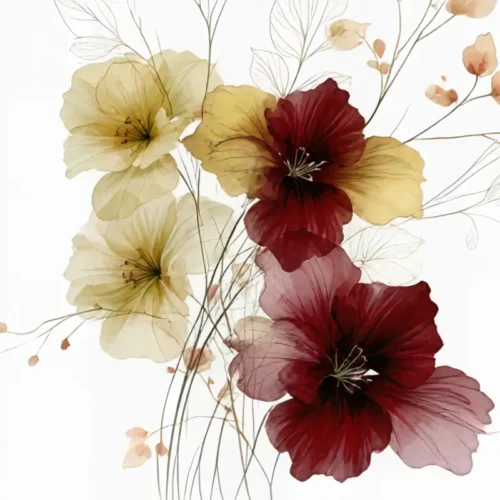
A room can be beautifully furnished and still feel unfinished until one image changes the air around it. Floral art has that rare ability to introduce color, gesture, and intimacy at once. When considering how to decorate with floral artwork, think beyond the idea of matching a bouquet to a sofa. The most compelling rooms use flowers as visual atmosphere: a concentrated burst of energy, a quiet field of color, or a dramatic encounter between light and shadow.
Floral imagery is especially expressive because it carries familiar forms into unfamiliar emotional territory. A blossom may feel luminous and buoyant, but it can also appear architectural, mysterious, even cinematic. That range makes floral artwork a sophisticated choice for interiors that should feel personal rather than prescribed.
Begin With the Room’s Emotional Temperature
Before choosing a print, notice what the room already asks for. A pale, sunlit dining room may welcome florals with layered color and movement, giving its restraint a more generous pulse. A study with dark wood, charcoal textiles, or leather seating may call for blossoms against black, where saturated petals seem to emerge from shadow with real theatrical force.
The purpose is not to make every element agree. A room gains dimension from a measured tension between artwork and furnishings. In a neutral interior, a large floral composition can become the room’s central event. In a richly layered space, a quieter botanical image may provide a moment of visual rest.
Consider the feeling you want to return to each day. Soft-focus florals and gentle tonal transitions can bring calm to a bedroom or reading area. Vivid, gestural blossoms offer confidence in an entryway, creative studio, or dining room where conversation gathers. Floral art is not merely decorative. It establishes a tempo for the space.
How to Decorate With Floral Artwork Through Scale
Scale determines whether artwork feels deliberate or incidental. A small print over a broad console or king-size bed often appears timid, no matter how beautiful the image itself may be. Conversely, an oversized floral work can transform a modest room by giving the eye a clear and memorable place to land.
Over furniture, use the width of the piece as a guide. Artwork generally feels most balanced when it spans roughly two-thirds to three-quarters of the furniture beneath it. This is not a rigid rule, particularly with a pair of vertical works or a multi-panel composition, but it prevents the art from becoming visually lost.
In rooms with high ceilings, vertical floral artwork can emphasize height without feeling cold. A tall stem, an upward sweep of petals, or an image with strong vertical motion gives the wall a sense of lift. Wide horizontal compositions work beautifully above a sofa, sideboard, or headboard, where they echo the room’s existing lines.
Do not assume every wall needs a single centered statement. A diptych can create rhythm across a long wall, while a triptych gives a sequence of floral movement room to unfold. Multi-panel artwork is particularly effective in transitional spaces such as hallways and landings, where the viewer experiences the image gradually while moving through the home.
Let Color Lead, Not Dictate
A floral artwork does not need to repeat every color in the room. Exact matching often drains the art of its independence. Instead, look for a meaningful relationship: a coral bloom that catches the warmth of a terracotta vase, a cool blue shadow that speaks to a slate rug, or a trace of gold that quietly joins brass lighting.
One approach is to choose a work that extends the room’s existing palette. This creates a refined, cohesive effect, especially in bedrooms and formal living areas. Another is to introduce a contrasting floral image that brings needed electricity. Deep magenta against olive green, luminous yellow in a black-and-white interior, or cobalt petals in a warm neutral room can make the architecture feel newly alive.
Pay attention to the proportion of color, not only the colors themselves. A print with a small but intense area of red may be enough to animate an otherwise quiet space. An artwork saturated from edge to edge can carry a more expansive emotional charge. If the room already contains patterned textiles, select floral art with a clear focal structure so the wall does not compete with the furnishings.
Use Contrast to Create Presence
Some of the most memorable floral interiors are built on contrast. A delicate subject rendered with high contrast can feel modern and powerful. Blossoms on a black ground, for example, bring a sense of depth that pale walls and light furnishings cannot create alone. The darkness gives petals a stage, allowing color, translucence, and intricate form to register with greater intensity.
This is why floral artwork belongs as naturally in contemporary spaces as it does in traditional ones. The subject may be timeless, but the interpretation can be bold, abstracted, or unexpectedly graphic. Photography that is transformed through digital manipulation often offers this distinction, retaining the sensual truth of the flower while moving beyond literal documentation.
Arthur Jacob Impressions approaches floral imagery in precisely this spirit, where a captured moment is reimagined as an expressive visual impression. Such work can hold a room with the authority of painting while preserving the immediacy of a lens-based image.
Consider Placement as Part of the Composition
The wall around a floral print is part of its presentation. Give the work enough breathing room to let its color and detail resonate. A crowded arrangement of accessories directly beneath a vivid piece can interrupt its impact, while a simple console, low vessel, or sculptural lamp can support the composition without competing for attention.
Hang artwork at a human scale. In most living spaces, the center of the image should sit near eye level, commonly around 57 to 60 inches from the floor. Above furniture, leave a clear visual connection between the art and the piece beneath it. Hanging it too high makes the wall feel divided; bringing it closer allows the arrangement to read as one gesture.
Floral art can also thrive in places often treated as afterthoughts. A single expressive print at the end of a hallway creates a destination. In a powder room, a small but richly colored work brings unexpected pleasure. A pair of florals in a kitchen or breakfast nook can soften hard surfaces and make an everyday ritual feel more considered.
Frame for the Interior, Not for a Trend
The frame should clarify the artwork’s character rather than announce itself first. A slim black frame gives contemporary floral work a crisp boundary and intensifies dark tonal elements. Natural wood introduces warmth and pairs beautifully with images that have softened hues or organic texture. A light, minimal frame can allow an airy composition to feel almost suspended on the wall.
White matting adds visual space and is often useful for smaller prints, particularly in a gallery wall. For large, immersive floral artwork, a full-bleed presentation may better preserve the image’s momentum. It depends on the composition: an intricate bloom may benefit from a pause around it, while a sweeping field of color may need to reach the edge to retain its force.
When building a gallery wall, vary the imagery with intention. Combine florals with abstract works, memory-driven images, or pieces that echo a related color or texture. Keep one common thread, such as consistent framing, a shared tonal family, or repeated scale. Without that thread, even beautiful art can feel like a collection of unrelated decisions.
Give the Artwork Time to Speak
Floral artwork changes with the hour. Morning light may reveal airy color and fine detail; evening lamplight can deepen shadows and make saturated petals feel more intimate. View a prospective placement at different times before deciding it is final. The right piece often continues to reveal itself rather than delivering all of its impact at first glance.
Choose the floral work that creates a response before it creates a scheme. When an image carries motion, color, and feeling with conviction, it does more than complete a wall. It gives the room a living visual memory, one that meets you differently every time you enter.
Leave a Reply